
Guide
Solo RPG: how tabletop roleplaying works with one player
A solo RPG is a tabletop roleplaying game played by one person, with no game master and no group. Dice, cards, tables and a journal take the place of the other people at the table. Below are the tools, the kinds of solo games and a premise to play for each.
Play a story like this
Ready stories from the library. The first scene opens right away, no account needed.
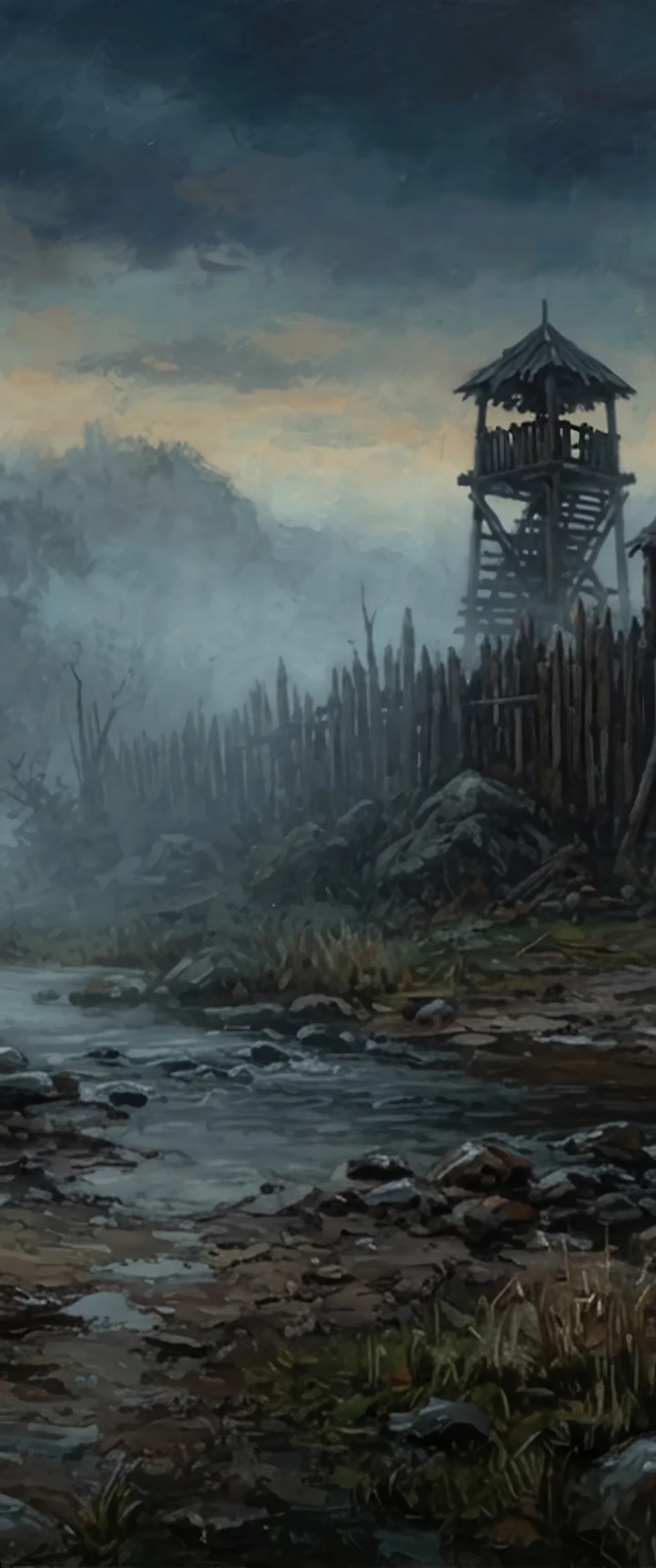
- Fantasy romance The Ash GateThe north road burned, the gate was opened from inside, and the warden has not slept in nine nights.
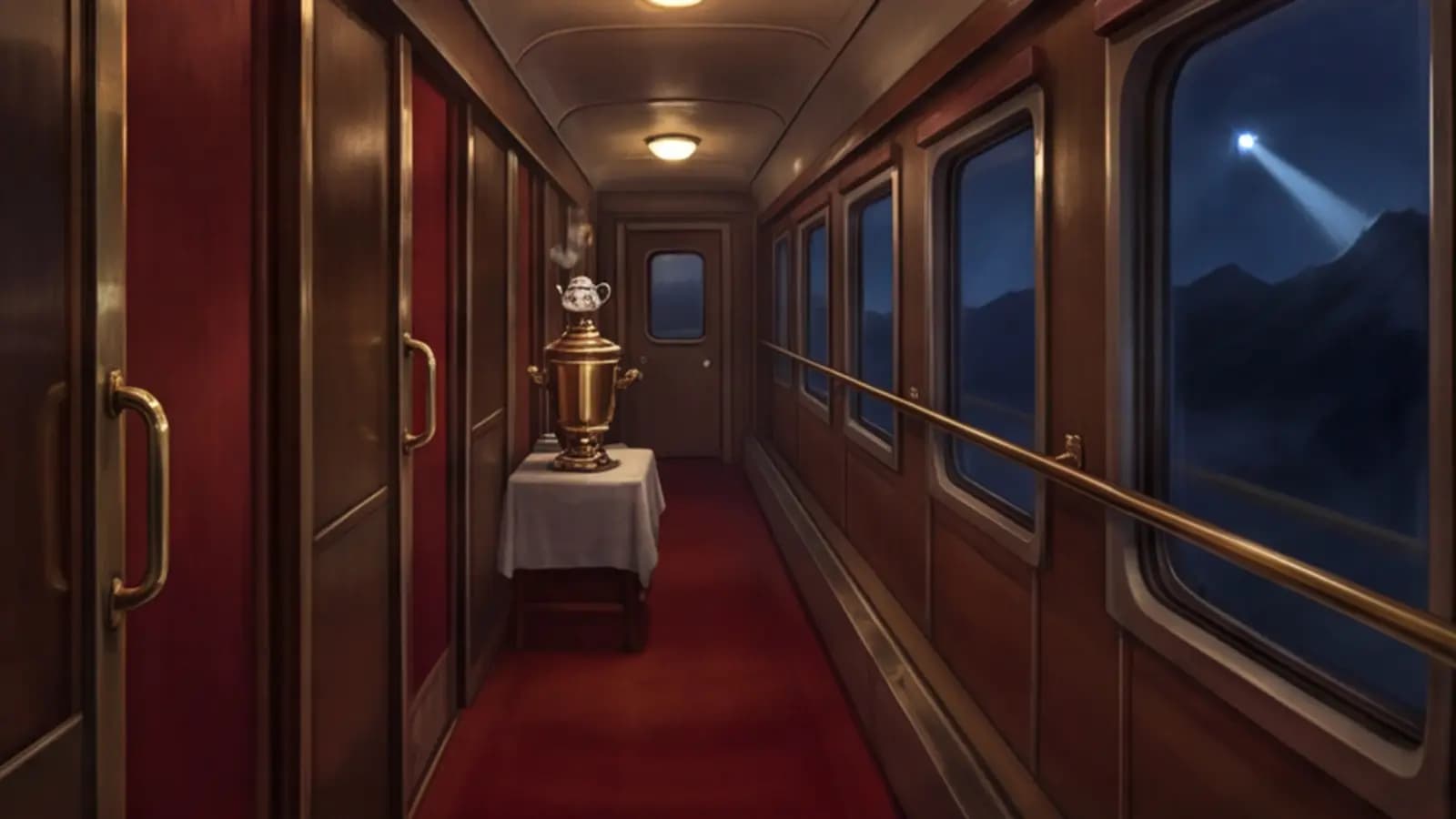
- Thriller The Night Train to BakuAn hour out of Tbilisi, a pipeline auditor lies dead in compartment four.
- Space opera Icarus CupA solar-sail race dives past the Sun once every eleven years.

Tools of solo play
The oracle
Also called a game master emulator. The player asks a question about the world, such as “Is the door locked?”, and a roll or a card gives the answer. Some oracles shift their odds as the story grows more chaotic.
Play: The Ash GatePlay this storyRandom tables
Lists of places, people, events and twists, picked by a roll. They supply the surprise a game master would otherwise bring.
Play: The Night Train to BakuPlay this storyDice and cards
Dice settle risk and answer the oracle; a deck of ordinary playing cards can do the same and adds suits and faces to read. A coin is the simplest oracle of all.
Play: Icarus CupPlay this storyThe journal
Many solo players write the story as it happens, in a notebook or a file. The journal is the record of play and, in some games, the whole point of it.
Play: The Ash GatePlay this storyThe map and the sheet
A character sheet tracks what the hero can do and has lost. Hex maps are drawn as the hero explores, one space at a time.
Play: Before the Minds SetPlay this story
Kinds of solo games
The solo adventure
A dungeon written as a gamebook with roleplaying rules. Buffalo Castle (1976), for the game Tunnels & Trolls, is described as the first stand-alone solo RPG product. The Fighting Fantasy books by Steve Jackson and Ian Livingstone carried the form from 1982.
Play: The Seventh VoyagePlay this storyThe journaling game
A single-player game in which writing is the core. In Thousand Year Old Vampire by Tim Hutchings, prompts drawn by dice carry a vampire through the centuries while memories fade and are lost. It won the 2020 IndieCade award for Tabletop Design and two ENNIE gold awards.
Play: The Red Book of Malá StranaPlay this storyA game built for solo and co-op
Ironsworn, written and self-published by Shawn Tomkin in 2018, can be played solo, co-op without a game master or with one. Its heroes swear vows and track progress toward them. The original English rules are a free download, and it won the 2019 ENNIE gold for Best Free Game.
Play: The Truthful InkPlay this storyGroup games with an emulator
Any group roleplaying game can be played alone with a game master emulator such as Mythic Game Master Emulator by Tana Pigeon. Questions get yes or no answers, and random events break into the scene.
Play: The Sixty-Hour VaultPlay this story
What a solo RPG is
A solo RPG is a tabletop or live-action roleplaying game that one person can play without a game master or other players. Some are designed for one player, others are solo modes for group games. The term usually leaves out single-player computer RPGs.
Solo play grew after 2010 and again during the COVID-19 pandemic. In 2026 the ENNIE Awards added a category for Best Solo Game. By 2023 itch.io listed over a thousand journaling games.
The tabletop RPG guide explains the group game these come from.
How a solo TTRPG session goes
A session moves in a loop. The player describes what the hero tries, asks the oracle or rolls for the result, reads the answer and writes what it means.
The interpretation is the creative part. A plain “no, and…” from the oracle becomes a locked gate with fresh tracks leading away from it.
Because nobody else is waiting, a session can last ten minutes or an evening, and the story can pause for weeks.
Solo gamebooks and solo roleplaying
Solo adventures and gamebooks share an ancestor. A gamebook offers fixed choices on numbered pages, while a solo roleplaying game leaves the next scene open and lets dice and tables fill it.
The history of the first kind is in the guide to gamebooks.
A solo RPG with an AI narrator
On PlayAIStories the oracle, the tables and the journal are replaced by a narrator. One line with a premise is enough to start; the game builds the setting and the cast, and writes each scene in prose.
The player holds one hero. Each scene ends with several choices and a field for a move of one’s own. Risky moves are settled by a die, with the odds shown in plain words first, and the die can be switched off.
The rules are the game’s own. It does not run the rules of any published tabletop system.