
Guide
Psychological horror games: six games that turn the mind against the player
Psychological horror games frighten by making the player doubt what is real: a town shaped by guilt, a sanity meter that lies, a house that rearranges itself. Below are six of them, each with what it does to the mind and a premise to play.
Play a story like this
Ready stories from the library. The first scene opens right away, no account needed.
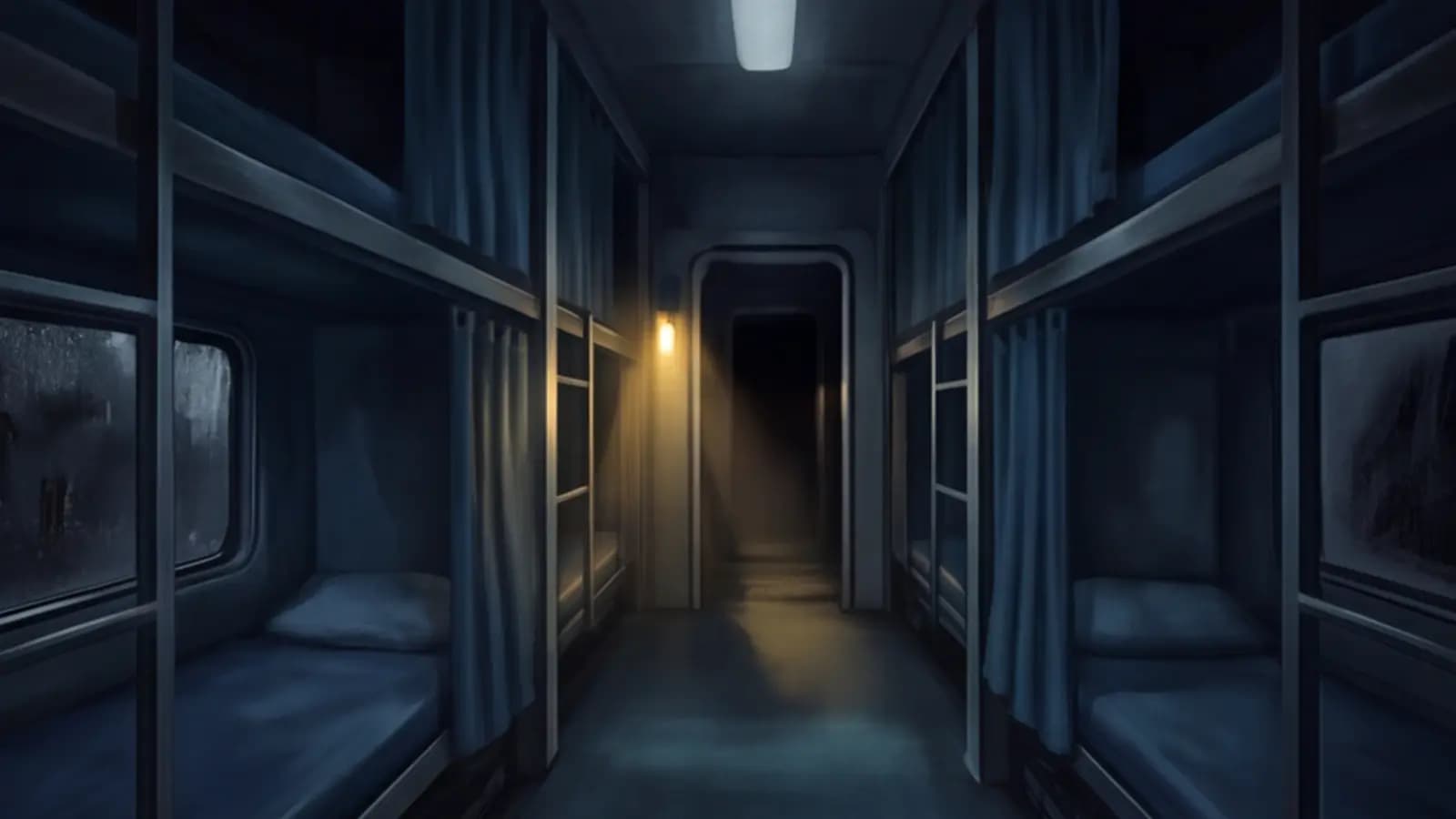
- Survival horror Nine Hundred in the DarkMonsoon landslides seal an overnight express inside a mountain tunnel.
- Vampire stories The Red Book of Malá StranaPrague, January.
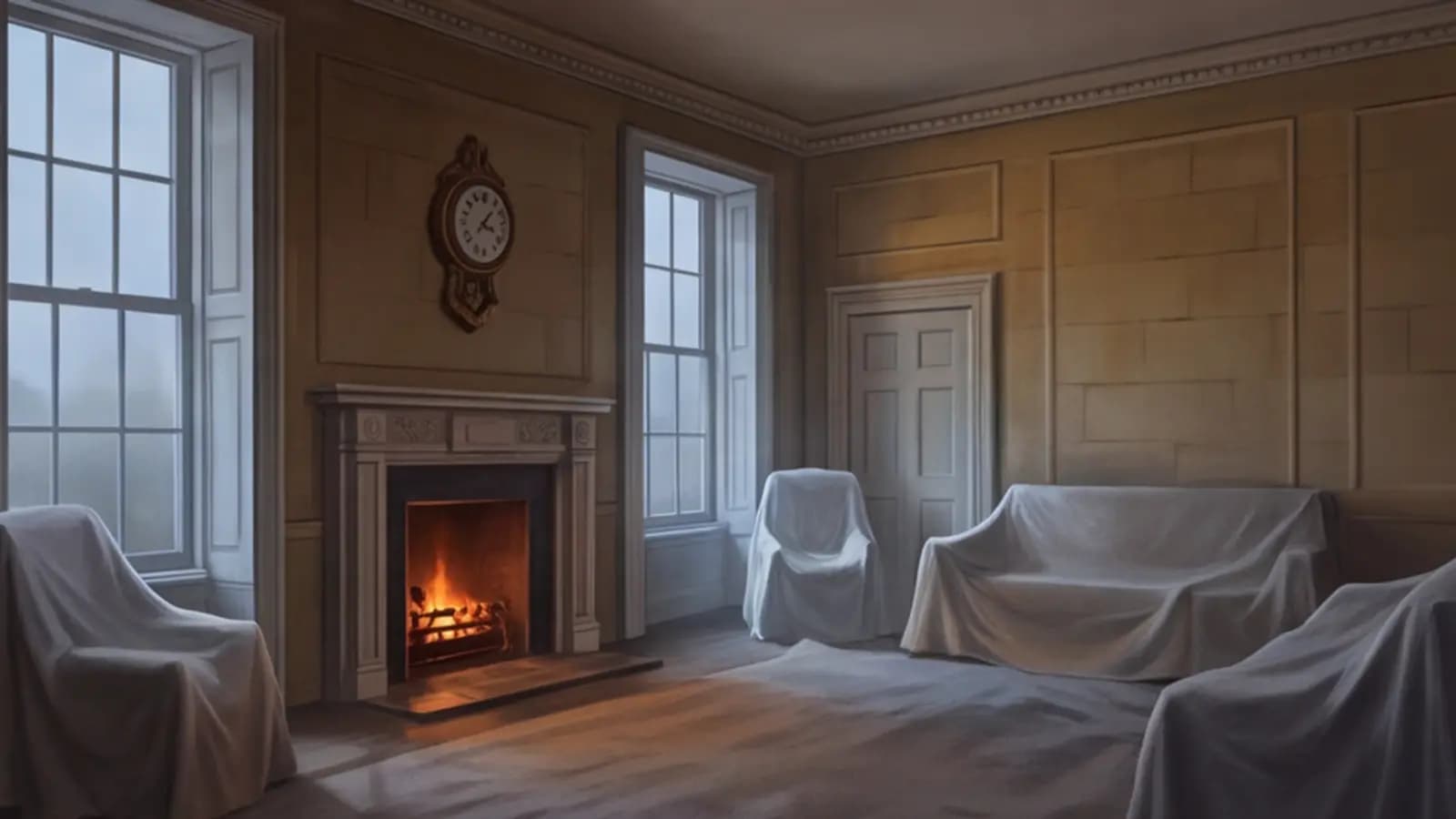
- Haunted house The House That Keeps TimeConstance Ruddock’s will leaves a sandstone house in Tasmania to whoever winds its thirteen clocks before midnight for thirty nights.

Six psychological horror games
Silent Hill 2
Team Silent at Konami, 2001, for PlayStation 2; remade by Bloober Team in 2024 for PlayStation 5 and PC. James Sunderland receives a letter from his wife, who died three years earlier, saying she waits for him in their “special place.” The town of Silent Hill takes shape around each visitor’s guilt and inner demons. The game has six endings.
Play: Nine Hundred in the DarkPlay this storyEternal Darkness: Sanity’s Requiem
Silicon Knights, published by Nintendo in 2002 for GameCube. Alexandra Roivas finds a book in her murdered grandfather’s house that holds the lives of twelve people across two thousand years. When a sanity meter drops, the game itself seems to fail: false error messages and fake faults of the TV or console that can be mistaken for real ones. Nintendo patented the system in 2005.
Play: The Ash GatePlay this storySOMA
Frictional Games, 2015, for PC and PlayStation 4, later Xbox One and Switch. Simon Jarrett wakes in PATHOS-II, a decaying research station under the North Atlantic, where the machines behave as if they had minds. The game has no weapons; the player hides, solves puzzles and asks what makes a self. A later safe mode keeps the monsters but stops them from killing.
Play: The Truthful InkPlay this storyLayers of Fear
Bloober Team, a Polish studio, published by Aspyr in 2016 for PC and consoles. A painter returns home after the First World War to finish his masterpiece in a Victorian mansion. The house changes around the player while it is explored in first person, so no room can be trusted to stay the same.
Play: The Bank Closes ThursdayPlay this storyHellblade: Senua’s Sacrifice
Ninja Theory, 2017, for PlayStation 4 and PC, later Xbox, Switch and PlayStation 5. The Pict warrior Senua travels to Helheim to save the soul of the man she loved. Her journey is a picture of psychosis, made with neuroscientists, mental health groups and people who hear voices, and the voices around her were recorded in binaural sound. It won Best Performance and Best Audio Design at The Game Awards 2017.
Play: Seventy-Two MinutesPlay this storyDetention
Red Candle Games, Taiwan, 2017, for PC, later PlayStation 4, Switch and Android; a 2D side-scroller. Two students are trapped in a remote mountain school in 1960s Taiwan, during the White Terror under martial law, and hunted by creatures called the lingered. Its horror draws on Taiwanese religion and folklore. A film version came out in 2019.
Play: Promised to the SaltPlay this story
Psychological horror stories to play
The narrator who cannot be trusted
The hero tells the story, and the story keeps disagreeing with the hero. The fear is in the gaps.
Play: Nine Hundred in the DarkPlay this storyThe place that changes
Rooms swap places, doors lead somewhere new, the photographs on the wall are not the same as this morning.
Play: The Red Book of Malá StranaPlay this storyThe guilt that takes a shape
Something from the past walks the halls. Whether it is a ghost or a memory, the hero has to face what it means.
Play: Dead Air on Line FourPlay this story
What makes a horror game psychological
Psychological horror games can use any style of play, but they lean toward exploration. Their aim is to make the player doubt what is really happening.
Some go further and attack the game itself. Eternal Darkness fakes faults of the console, and the visual novel Doki Doki Literature Club! (2017) imitates crashes and corrupted files.
The genre in fiction, from Poe to Shirley Jackson, is covered in the guide to psychological horror.
The first psychological horror video games
Phantasmagoria (1995), D (1995), Corpse Party (1996) and Silent Hill (1999) are named among the first psychological horror games. Silent Hill made the form popular and moved survival horror toward fog, flashlights and dread.
The neighboring branch with scarce ammunition and a weak hero is in survival horror games.
Psychological horror games as a played story
On PlayAIStories horror is one of the genres, and a story starts from one line with a premise. It is told in prose, a few paragraphs to a scene, with no 3D rooms and no timers.
The story keeps notes on what happened and what each character said. That makes it a good ground for doubt: a detail from the first chapter can return in the third, slightly wrong.
Each scene ends with several choices and a field for a move of one’s own, and risky moves are settled by a die. Dark themes are allowed, and such stories carry an 18+ mark.