
Guide
Space opera: what the genre is, its parts and its kinds
Space opera is science fiction on the grandest scale: fleets, empires and adventures across a galaxy where travel faster than light is ordinary. This guide covers its building blocks and its kinds, each with a premise to play.
Play a story like this
Ready stories from the library. The first scene opens right away, no account needed.
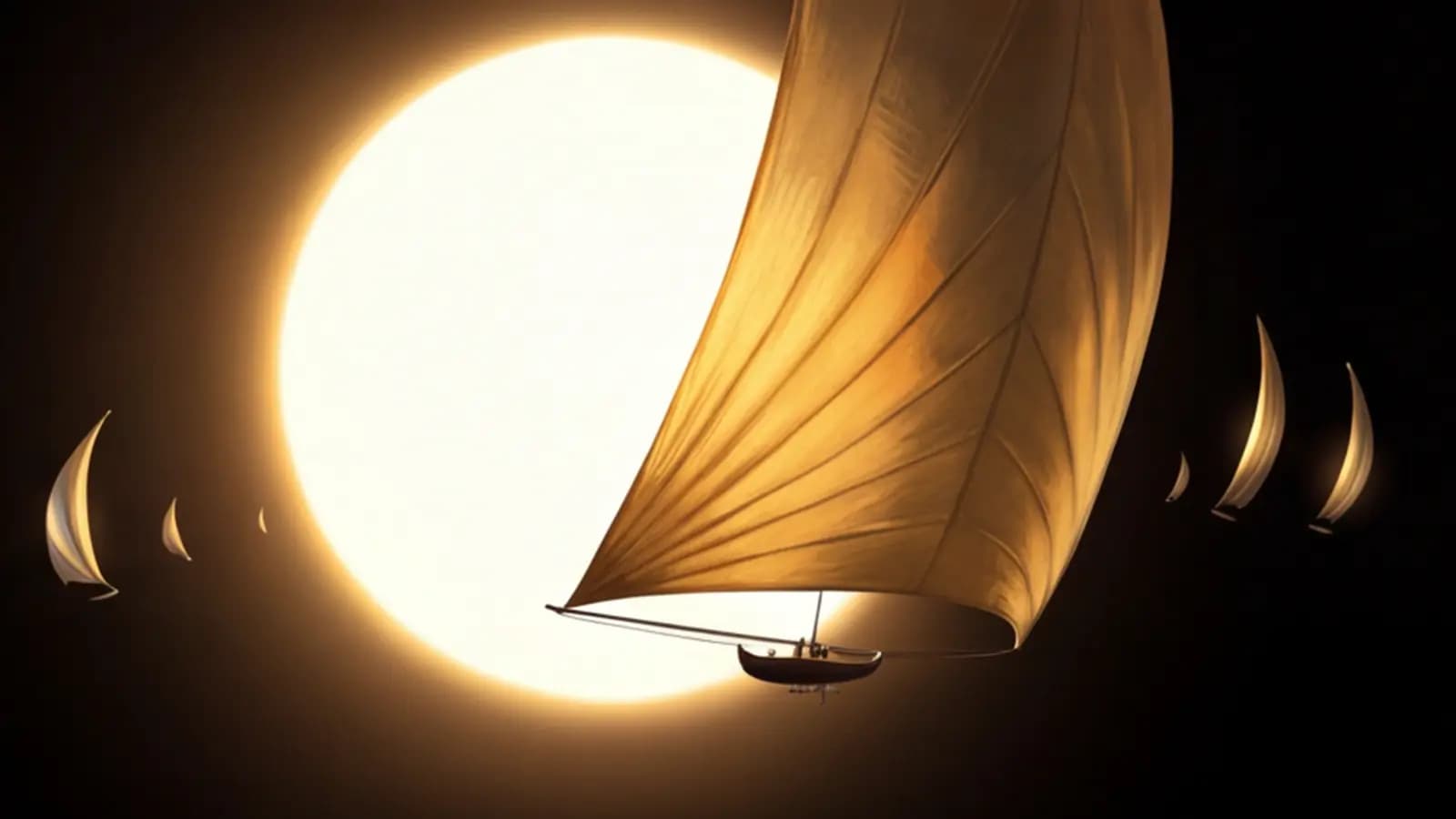
- Space opera Icarus CupA solar-sail race dives past the Sun once every eleven years.
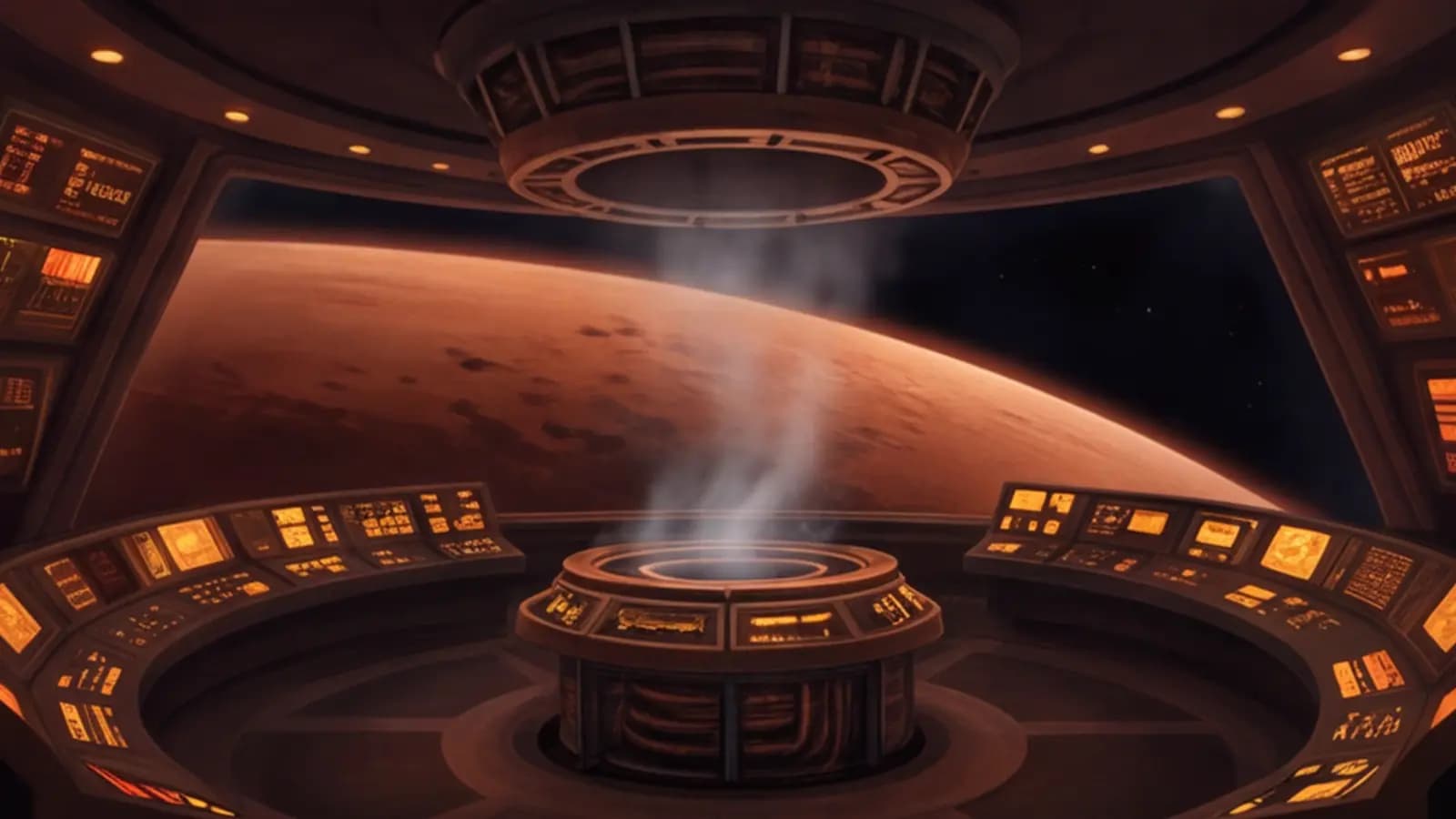
- Space opera Before the Minds SetA systems engineer on a station orbiting Mars wakes up in the commander’s body after a mind-transfer test misfires, with seventy-two hours to switch back.
- Space opera The Light Is OursEleven million mirrors circle a star and feed its light to three distant worlds.

Building blocks of space opera
Faster than light
Ships cross between stars in days, not centuries. Without that one impossible engine there is no galaxy-wide story to tell.
Play: Icarus CupPlay this storyThe galactic empire
A power that rules hundreds of worlds, with a throne, a court and frontiers that are hard to hold. Its rise or fall is often the background of the plot.
Play: The Memory of RomePlay this storySpace battles
Fleets, boarding actions and last stands. The genre likes war on a large scale and high stakes for those caught in it.
Play: Before the Minds SetPlay this storyAlien civilisations
Peoples with their own histories, laws and reasons. The best ones want something the heroes can understand and still cannot give.
Play: The Guest in the FjordPlay this storyPirates and smugglers
Piracy is one of the genre’s favourite themes. The outlaw crew on the edge of the law sees the empire from below.
Play: Forty Days of GracePlay this storyThe heroic lead
A sympathetic central character, usually a civilian or an irregular rather than a career soldier. That is one of the marks that set space opera apart from military science fiction.
Play: The Light Is OursPlay this story
Kinds and neighbours
Classic space opera
The colourful adventure of the pulp magazines from the late 1920s. E. E. “Doc” Smith’s The Skylark of Space, printed in Amazing Stories in 1928, is often called the first great space opera.
Play: The Wayfinder’s SongPlay this storyNew space opera
A reaction against the old style that grew from the 1970s on. It is darker, drops the simple triumph of humanity, gives more weight to character and can be scientifically rigorous.
Play: The Scent EmbassyPlay this storyMilitary science fiction
The close neighbour that follows soldiers and the chain of command. Space opera has wars too, but it follows the people around them.
Play: The Station Is in LovePlay this storySpace western
The frontier moved to the stars: lonely outposts, rough towns, settlers and drifters. It often overlaps with space opera.
Play: Anansi’s BasketPlay this story
What space opera means
Space opera is a branch of science fiction about epic adventure in space. Its plots turn on space wars, alien civilisations and galactic empires, usually in a distant future.
The name began as an insult. The fan writer Wilson Tucker coined it in 1941 in the fanzine Le Zombie. He built it on “soap opera” and “horse opera”, the stock radio serial and the stock western.
Tucker meant a hacky, worn-out spaceship yarn. The meaning turned around later.
How the word changed
From the 1960s the word slowly lost its sting. Brian Aldiss’s anthology Space Opera of 1974 fixed the new sense, roughly “the good old stuff”.
By the early 1990s space opera was accepted as a genre in its own right. Its classic tone is large, colourful and optimistic; its newer writers often keep the scale and drop the optimism.
Played among the stars
On PlayAIStories one line with a premise is enough to start. The game builds the world and the cast and shows them before the first scene, where names, roles and tempers can be changed.
Each scene ends with several choices and a field for a move of one’s own. Risky moves, such as a jump through an uncharted route, are settled by a die, and the odds are shown in plain words first.
The story keeps a record of what happened, so a debt to a smuggler in the first chapter can come due later.