
Guide
Ghost stories: the tradition from the fireside to M. R. James
Ghost stories are tales of the dead who come back, and in English they have a season of their own: the long nights around Christmas. This guide follows the tradition from an ancient letter to M. R. James and sorts its kinds, each with a premise to play.
Play a story like this
Ready stories from the library. The first scene opens right away, no account needed.
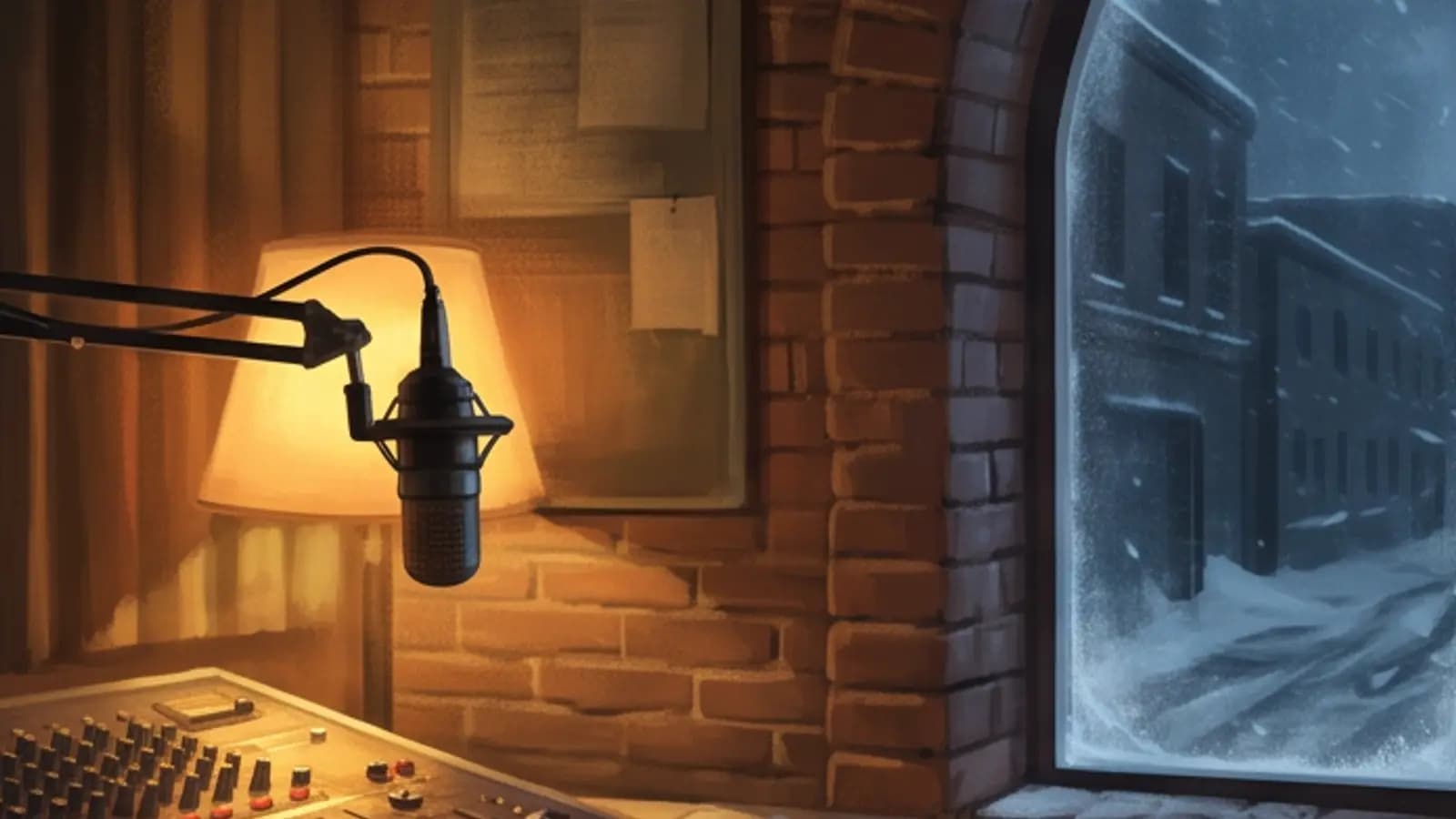
- Ghost stories Dead Air on Line FourA radio host in Winnipeg answers the line that only rings in blizzards.
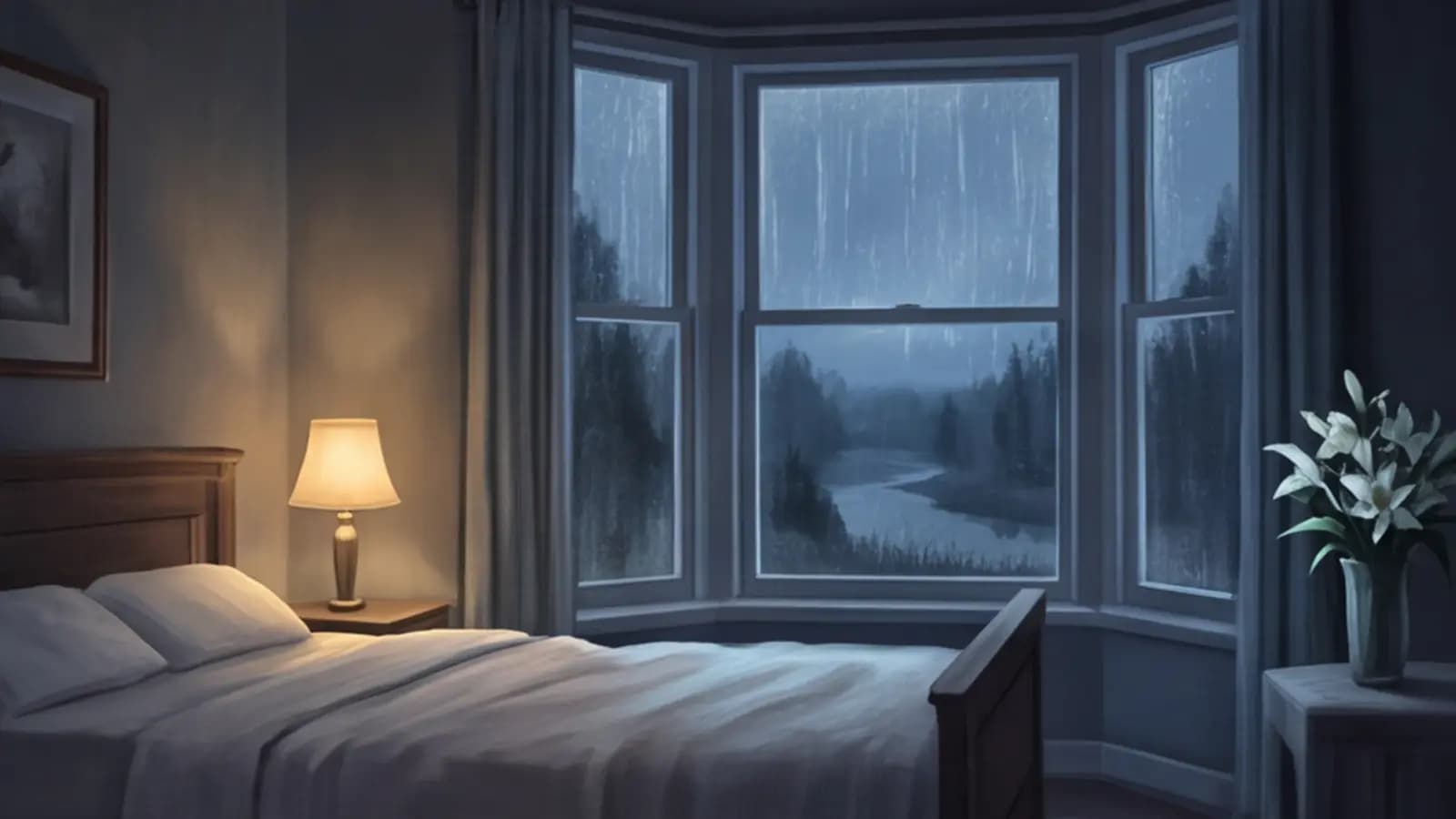
- Ghost stories Agnes Won’t Go QuietlyA Glasgow hospice volunteer who nearly drowned now hears the dead.
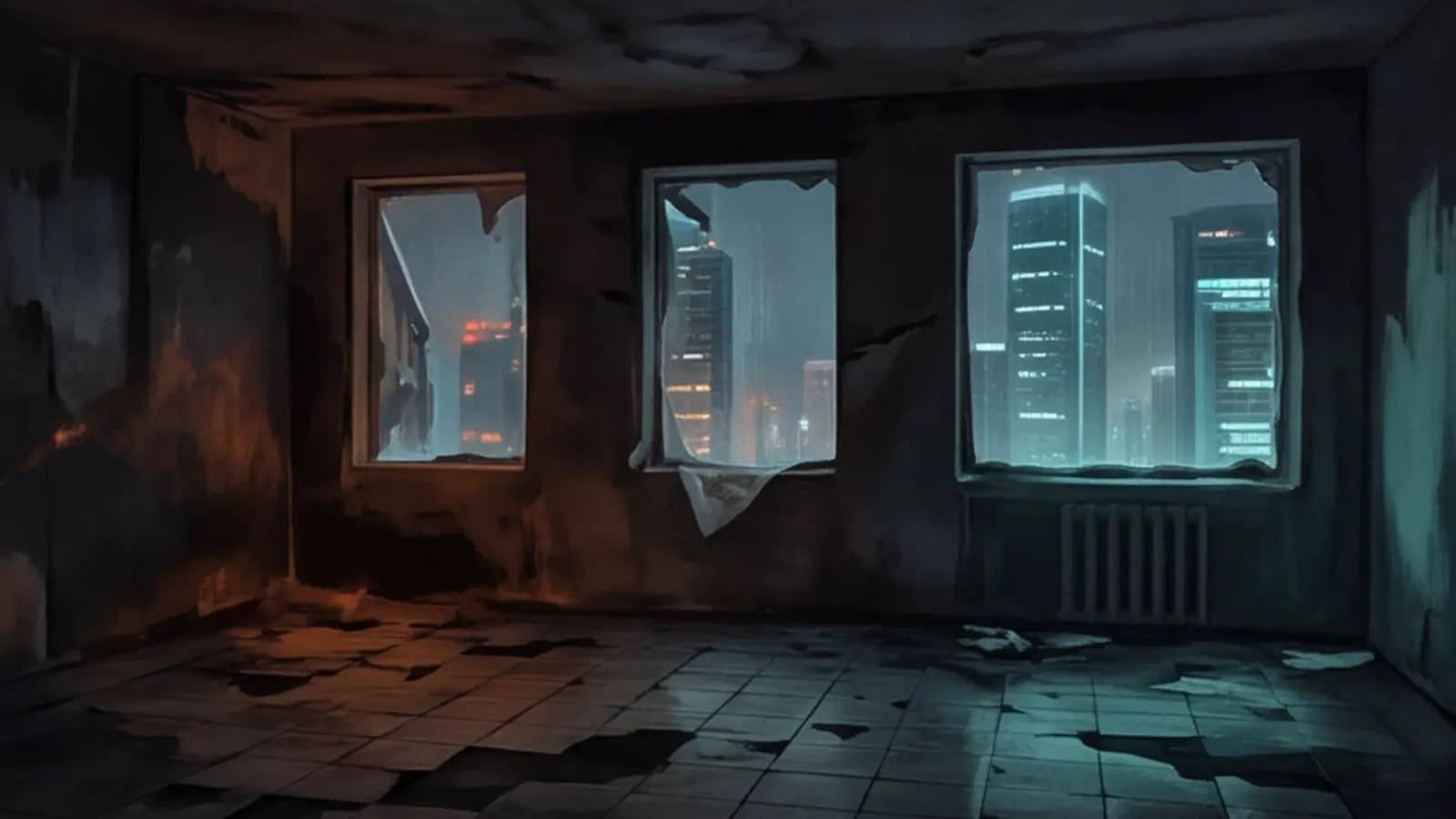
- Ghost stories Live from Unit 904A ghost-stream camera operator in Seoul is the only one who can’t see the man standing behind them.
Kinds of ghost story
The antiquarian ghost story
The kind M. R. James made his own. A quiet scholar finds an old book, a carving or a buried object. The find lets out something that should have stayed where it was.
Play: Dead Air on Line FourPlay this storyThe Christmas ghost story
Told on Christmas Eve by the fire, or printed in the Christmas numbers of Victorian magazines. Dickens’s Household Words filled its Christmas issue of 1852 with “A Round of Stories by the Christmas Fire”.
Play: The Bank Closes ThursdayPlay this storyThe haunted house
A house that cannot keep a tenant. Pliny the Younger described a house in Athens haunted by a ghost in chains, and later literature kept the pattern.
Play: The House That Keeps TimePlay this storyThe ghost with a purpose
A spirit that returns to warn, to accuse or to change someone. In A Christmas Carol of 1843 the ghosts visit a miser to save him from himself.
Play: Agnes Won’t Go QuietlyPlay this storyThe tale told long after
An old person recalls what happened in their youth, in a letter or by the fire. Elizabeth Gaskell’s “The Old Nurse’s Story”, from that 1852 Christmas number, is told this way.
Play: Agnes Won’t Go QuietlyPlay this storyKaidan
The Japanese “strange tale”. It spread through a storytelling game of the Edo period, and kaidan are not always frightening: some are odd or even funny. Lafcadio Hearn’s Kwaidan of 1904 brought such tales to readers in Europe and America.
Play: Two Purses, One FrogPlay this story
M. R. James’s rules, as premises
A pretence of truth
The story claims to be true, or at least gives dates, names and places that sound true.
Play: Promised to the SaltPlay this storyA malevolent ghost
James held that the ghost should be malevolent or odious. A friendly ghost belongs to another kind of story.
Play: Live from Unit 904Play this storyA familiar setting
James wanted a setting close to the reader’s own time. A haunting in a familiar street is harder to shrug off.
Play: Live from Unit 904Play this storyNo machinery explained
The story does not explain how the haunting works. A little left dark frightens more than a full account.
Play: Dead Air on Line FourPlay this story
What ghost stories are
Ghost stories are tales in which the dead return to the living: to warn, to take revenge, or for reasons nobody learns. They are among the oldest stories people tell, and many were meant to be read aloud.
The “classic” English ghost story belongs to the Victorian age. Its authors include Sheridan Le Fanu, Violet Hunt, Henry James and M. R. James.
Why ghosts belong to Christmas
Telling ghost stories on winter nights is an old custom. Shakespeare knew it. In The Winter’s Tale a boy says: “A sad tale’s best for winter: I have one / Of sprites and goblins.”
Charles Dickens tied the custom to Christmas itself. After A Christmas Carol, magazines printed special Christmas issues full of ghosts, and by 1891 Jerome K. Jerome could joke about the habit in Told After Supper.
M. R. James and the antiquarian tale
Montague Rhodes James (1862 to 1936) was a Cambridge scholar and Director of the Fitzwilliam Museum. He later became Provost of King’s College, Cambridge, and then of Eton. On 28 October 1893 he read two ghost stories aloud to a small club of friends at King’s.
He went on reading new stories to friends and students as Christmas Eve entertainments. His first collection, Ghost Stories of an Antiquary, came out in 1904.
In an essay of 1929 he set down what a ghost story needs. The rules above come from it, with one more: no needless bloodshed.
A ghost story played scene by scene
In a told ghost story the listener can only wait. In a played story the decision to open the east wing is the player’s.
On PlayAIStories one line with a premise is enough to start. Each scene ends with several choices and a field for a move of one’s own. The story keeps a record of what happened, so a warning ignored in the first chapter can return in the third.