
Guide
Narrative games: what they are and the kinds worth knowing
Narrative games are games played for the story: the reason to continue is to learn what happens next, not to beat a score. The kinds below run from quiet walks through an empty house to stories told aloud at a table.
Play a story like this
Ready stories from the library. The first scene opens right away, no account needed.
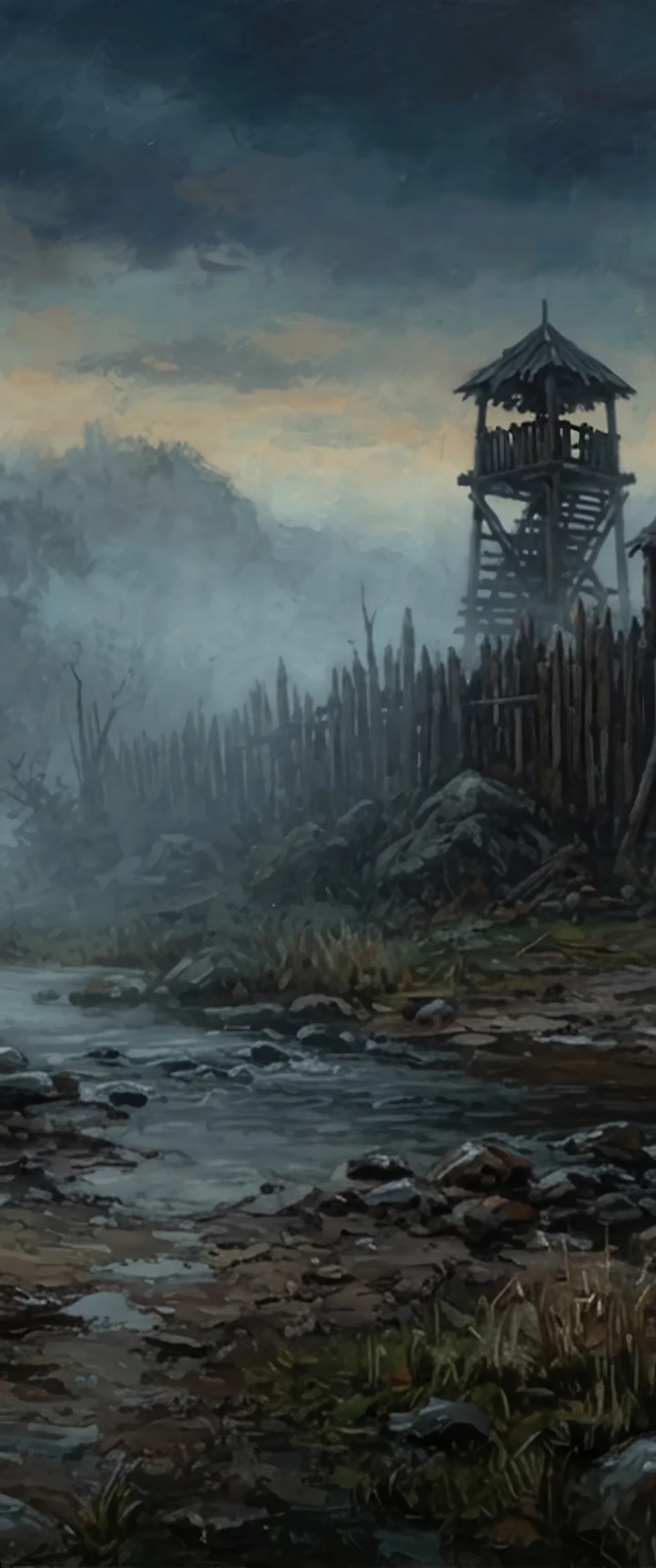
- Fantasy romance The Ash GateThe north road burned, the gate was opened from inside, and the warden has not slept in nine nights.
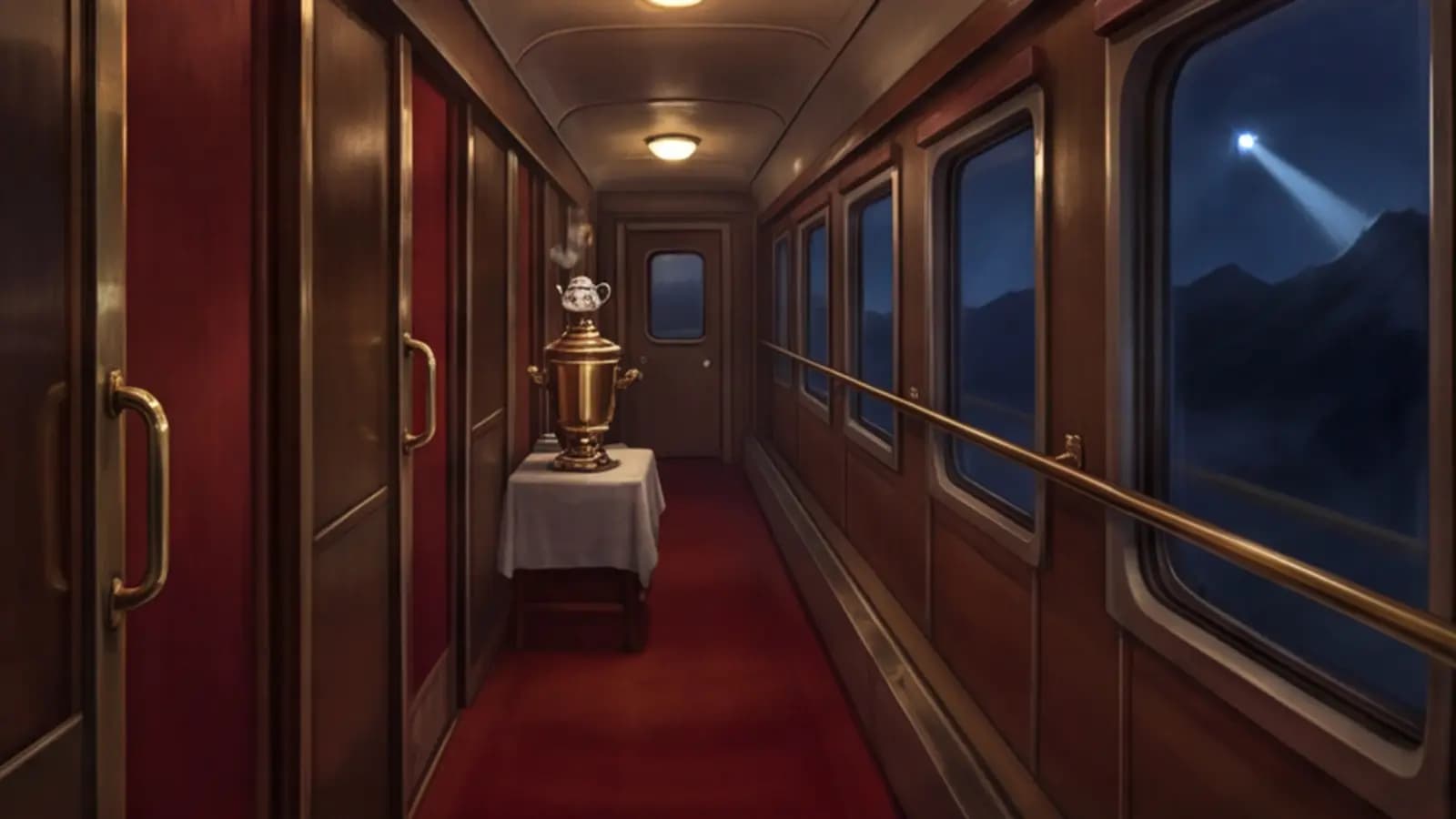
- Thriller The Night Train to BakuAn hour out of Tbilisi, a pipeline auditor lies dead in compartment four.
- Space opera Icarus CupA solar-sail race dives past the Sun once every eleven years.

Narrative games on a screen
Walking simulator
A game of exploring a place and piecing together what happened there. There are no enemies and few puzzles. The story is in letters, voices and the way rooms were left.
Play: The Ash GatePlay this storyNarrative adventure
A story with a cast and a plot, played through conversation and decisions. The player controls one character, and the drama is in what that character says and does under pressure.
Play: The Ville de BrestPlay this storyVisual novel
A story read as text over character art and backgrounds. Some have many branches, and some have none and are simply read from start to end.
Play: Icarus CupPlay this storyInteractive drama
A game staged like a film, with actors or lifelike models, camera work and quick decisions. A main character can die, and the story goes on without them.
Play: The Long Road to KyotoPlay this storyStory-rich RPG
A role-playing game in which the writing carries the weight. Fights may be rare or absent; the hero’s skills show mostly in what can be said and noticed in dialogue.
Play: The Sixty-Hour VaultPlay this storyDetective and deduction game
The story is already over, and the player rebuilds it. Clues, records and testimony are gathered, and the game asks for the conclusion instead of handing it over.
Play: Cabin NinePlay this storyFound-phone and document game
The whole game is a screen inside the screen: someone’s phone, an old computer, a box of files. The plot is read out of messages, photos and search results.
Play: The Ash GatePlay this story
At a table and in text
Tabletop storytelling game
A game for a group in which the play is the telling. Cards or simple rules give prompts, and the players build the story aloud together.
Play: The Night Train to BakuPlay this storyInteractive fiction
Narrative games in pure text. The reader moves through the story by typing commands or choosing links, and prose does the work of graphics.
Play: Icarus CupPlay this storyAI-narrated story
A story with a narrator that writes in answer to the player. The scene is composed when it is reached, with characters who remember what was said to them.
Play: The Ash GatePlay this story
What makes a game narrative
A game is called narrative when the story is the main reward. Reflexes and strategy take second place or are left out. What the player does serves the telling: walking, reading, talking, deciding.
That is a matter of emphasis, not a strict category. A shooter can have a good plot, but people play it for the shooting. A narrative game is one people would describe by what it is about.
Narrative games and choice games
The two overlap, but they are not the same. A choice game puts decisions at the centre, and its story branches. A narrative game needs only a story worth following.
Some of the best-known narrative games are linear. The player walks through one fixed story and changes nothing in it. What the game adds to a film is presence: the player is the one opening the door.
A narrator that answers
On PlayAIStories the story has scenes and chapters, a cast that wants things of its own, and an ending that depends on what was done. A scene is a few paragraphs of prose and ends with several choices or a move written freely.
Risky moves are settled by a die, and a failed roll turns the story instead of ending it. The game keeps a journal of what happened and of the characters met.