
Guide
Fairy tales: the main kinds and what they are built from
Fairy tales are short stories of magic and trial, passed on by word of mouth long before collectors wrote them down. This guide sorts them into kinds, from the wonder tale to the dark first versions, and lists the parts they are built from.
Play a story like this
Ready stories from the library. The first scene opens right away, no account needed.
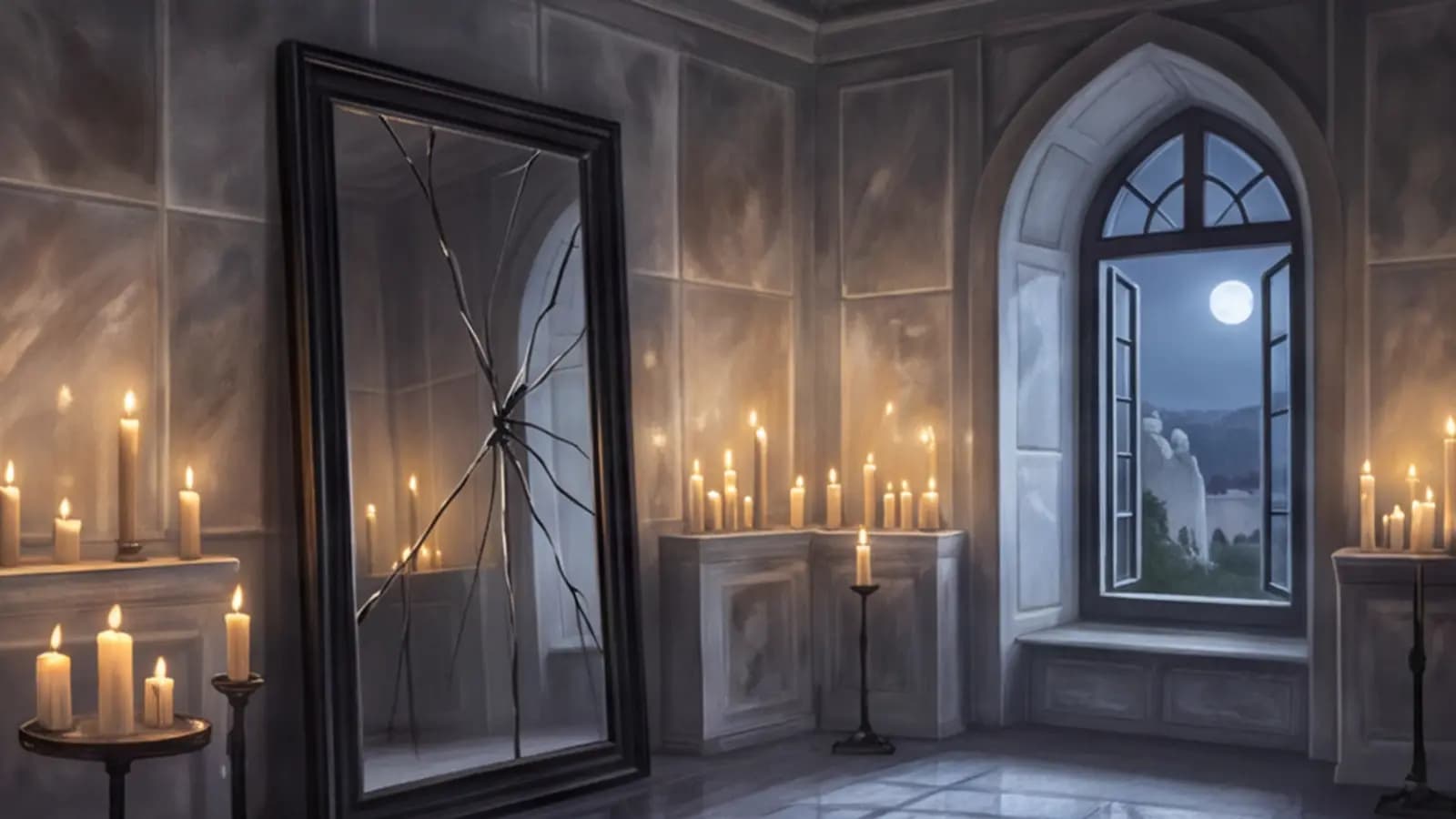
- Dark fairy tales The Mirror That LiesThe queen’s truth-telling mirror has cracked, and the last two glaziers went home blindfolded.
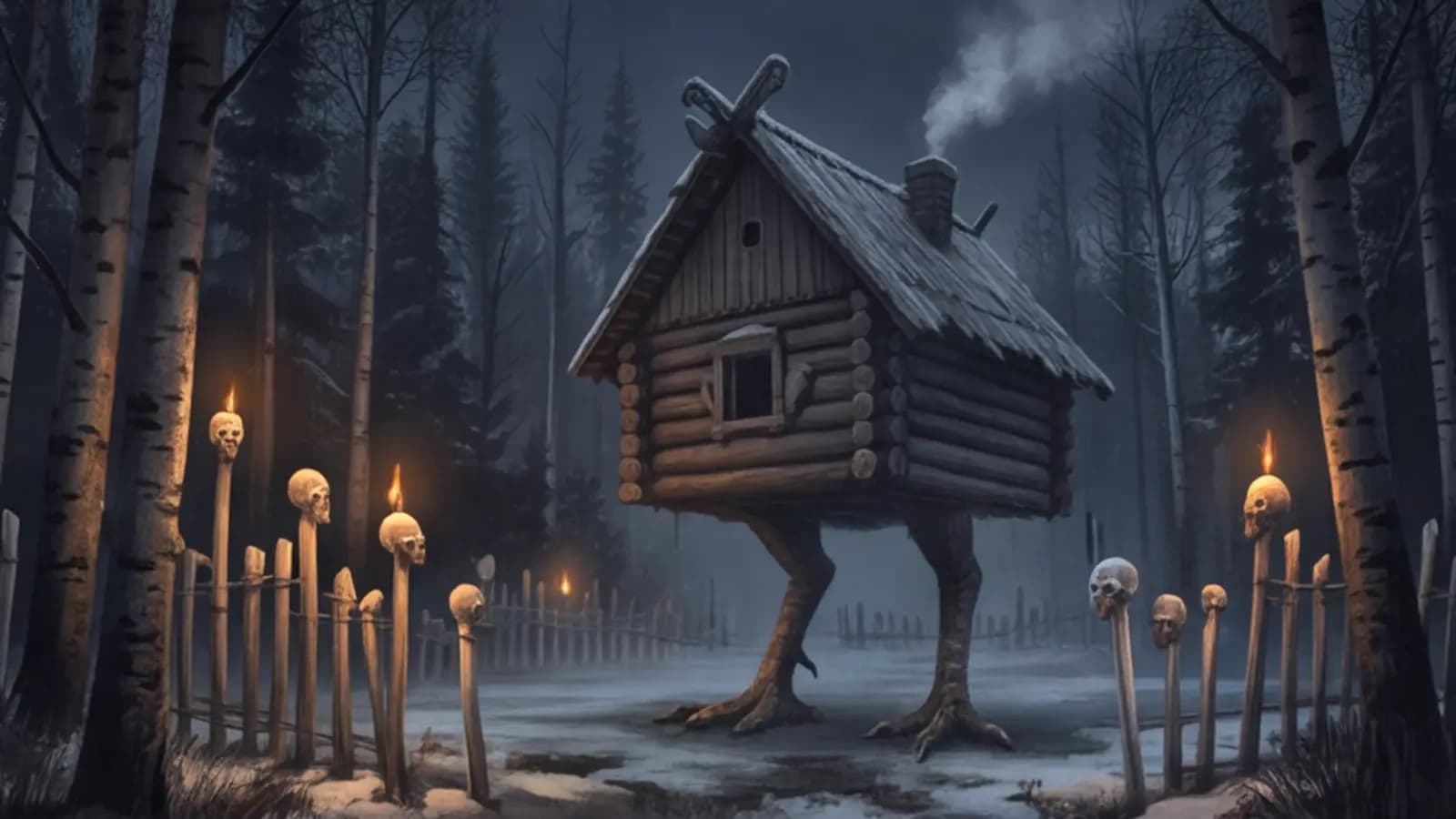
- Dark fairy tales Three Nights at Baba Yaga’sEvery hearth in Gnilushki is dark.
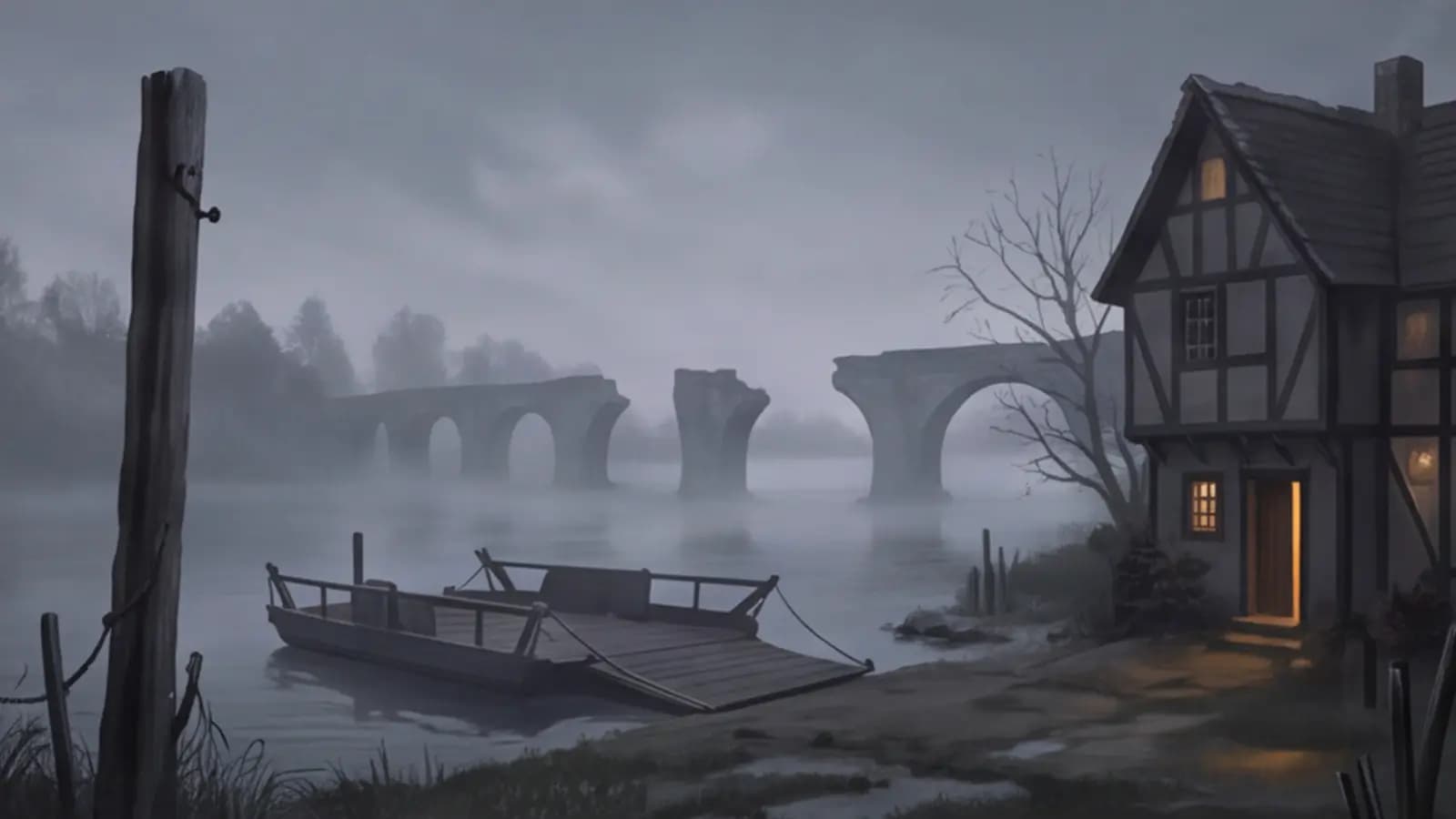
- Dark fairy tales The Crow at the Ferry PostA ferryman’s child promises a crow the first thing that greets them at home, for three favours.
Kinds of fairy tale
Wonder tale
The kind most people mean by the word. A hero leaves home, meets magic, passes a trial and comes back changed. Folklorists also call it a tale of magic, or use the German word Märchen.
Play: The Ash GatePlay this storyAnimal tale
Animals speak and scheme like people: a fox, a wolf, a hare. The fables told under Aesop’s name and the medieval stories of Reynard the Fox belong to this tradition. The hero is often a trickster, small and clever.
Play: The Purple Ink Is WetPlay this storyCumulative tale
Also called a chain tale. One action repeats and grows with every turn, as in “The Gingerbread Man” or “This Is the House That Jack Built”. The plot is thin, and the pleasure is in the rhythm and the sudden end.
Play: The Crow at the Ferry PostPlay this storyLiterary fairy tale
A tale with a known author who writes in the manner of the old stories. Hans Christian Andersen is remembered above all for tales of this kind, among them “The Little Mermaid” and “The Snow Queen”.
Play: Promised to the SaltPlay this storyDark tale as first told
The early printed versions are harsher than the nursery ones. In Charles Perrault’s “Little Red Riding Hood” of 1697 no rescuer comes: the wolf eats the girl, and the tale ends. In the Grimms’ “Cinderella” the stepsisters cut their own feet to fit the slipper.
Play: Three Nights at Baba Yaga’sPlay this story
Building blocks of a fairy tale
Once upon a time
A fairy tale has no date and no map. It happens “once upon a time”, in a kingdom, a forest or a mill that could stand anywhere. That vagueness is what lets the same tale travel from country to country.
Play: Seventy-Two MinutesPlay this storyThe rule of three
Things come in threes: three brothers, three tasks, three nights. Two attempts fail and the third succeeds, and the youngest child is usually the third. Rumpelstiltskin spins three times and allows three days of guesses at his name.
Play: The Mirror That LiesPlay this storyThe forbidden door
The hero is given every key and told that one door must stay shut. It never does. In Perrault’s “Bluebeard” the young wife opens the forbidden chamber and finds out what became of the wives before her.
Play: Three Nights at Baba Yaga’sPlay this storyThe helper
Someone hands the hero the thing that makes the task possible. The fairy godmother is the best-known form; grateful animals and the spirit of a dead mother do the same work. Scholars of folklore call this figure the donor.
Play: The Changeling in the CradlePlay this storyThe test
Help is rarely free. Before giving anything, the helper tests the hero with a question, a small task or a request. Rudeness is punished as surely as kindness is rewarded.
Play: The FracturePlay this storyThe impossible task
A task is set that no person could finish alone. In the Grimms’ “Cinderella” the stepmother throws lentils into the ashes to be picked out in two hours. A flock of doves does the sorting.
Play: Three Nights at Baba Yaga’sPlay this storyThe bargain and its price
Magic is paid for, and the price comes due later. Rumpelstiltskin spins straw into gold for the miller’s daughter and then asks for her child. Only guessing his name cancels the debt.
Play: The Truthful InkPlay this story
Where fairy tales come from
Fairy tales exist in two forms, the told and the written. The name itself is a translation of the French “conte de fées”, which Madame d’Aulnoy used in the late seventeenth century.
Charles Perrault published his tales in Paris in 1697, among them “Cinderella”, “Sleeping Beauty” and “Bluebeard”. The Brothers Grimm brought out the first volume of their German collection in 1812.
Folklorists sort the tales by plot. The index they use was begun by the Finnish scholar Antti Aarne in 1910 and has been enlarged twice since.
Why the first versions are dark
The old tales keep wolves, hunger and cruel stepmothers in plain sight. Gentler endings came with later retellings.
“Little Red Riding Hood” shows the change. Perrault’s tale ends inside the wolf. In the Grimms’ version a huntsman cuts the sleeping wolf open, and the girl and her grandmother step out unharmed.
A fairy tale as a story to play
Each entry above comes with a premise, and “Play this story” opens the story wizard with it. Fairy tale is one of the game’s genres, and from the line AI builds the world, the characters and the first scene.
The tales are not all gentle. Dark themes are allowed, and such stories carry an 18+ mark. Explicit scenes are not written.