
Guide
How to write a story: the elements, the steps and the old rules
How to write a story comes down to a few parts that every story has: a character who wants something, an obstacle in the way and a change by the end. This guide sets out those elements, the usual steps from a first idea to a finished draft, and a few rules writers have repeated for centuries, each with a premise to try.
Play a story like this
Ready stories from the library. The first scene opens right away, no account needed.
The elements of a story
A character who wants something
A story usually follows one person with a want the reader can name in a sentence. The want gives every scene a direction, even when the character never gets it.
Play: The Crossroads DebtPlay this storyAn obstacle
Conflict is whatever stands between the character and the want: another person, a rule, the weather, a flaw. Without it, the story is a report.
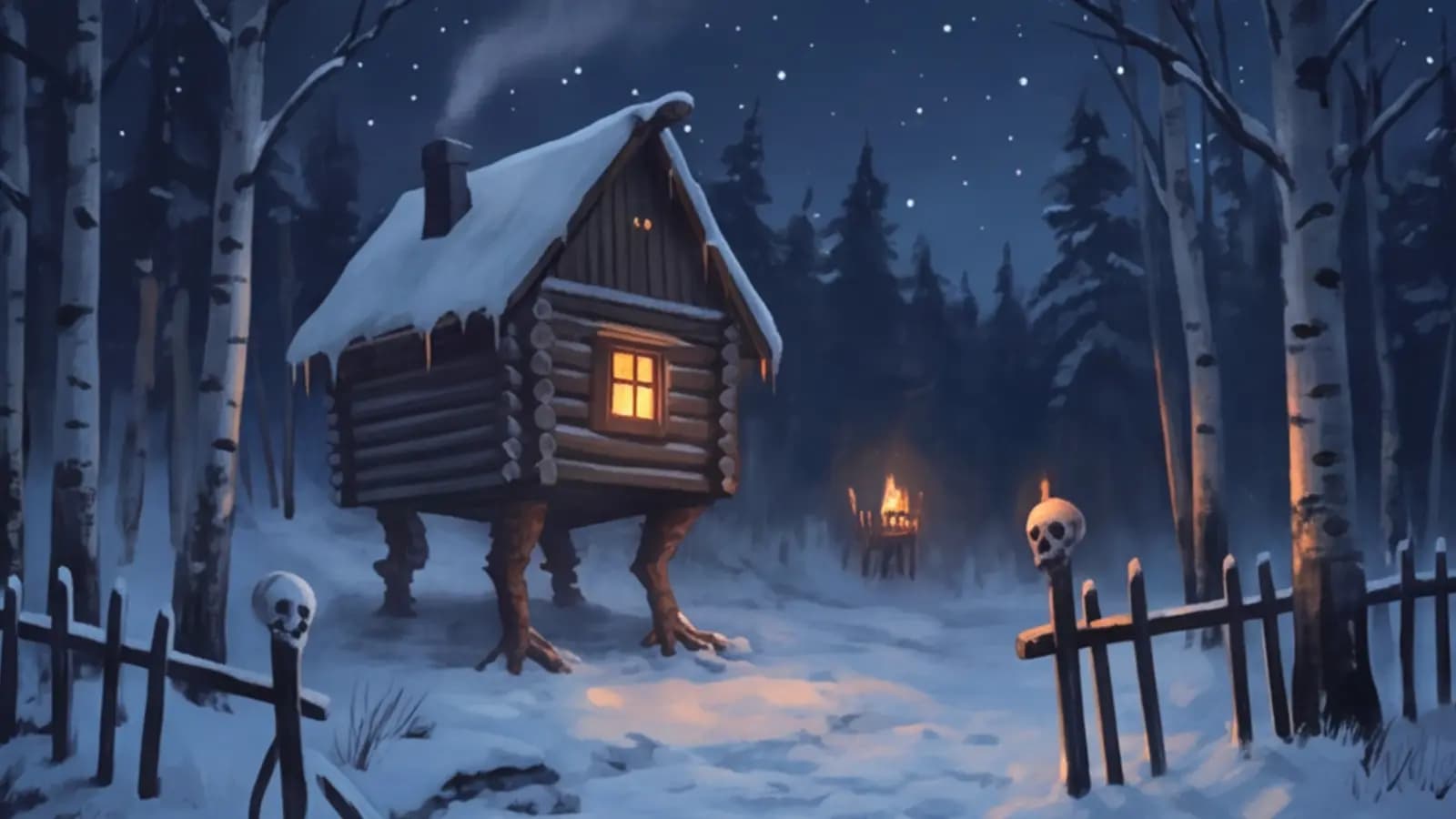
Play: Courier for Baba YagaPlay this storyA setting with rules
The setting is more than scenery. A village where everyone knows everyone, or a ship that cannot turn back, decides what the characters can and cannot do.
Play: The FracturePlay this storyA point of view
Someone tells the story: one character from inside, or a narrator who sees more. The choice decides what the reader learns and when.
Play: The Crossroads DebtPlay this storyA change
By the end something is different: the character, the situation or the reader’s understanding of both. A story where nothing changes tends to feel unfinished.
Play: Courier for Baba YagaPlay this story
From idea to draft
The idea in one line
Many stories start as a single line holding a person, a place and one thing gone wrong. If the line can be said aloud in one breath, the story has a spine.
Play: Seven Games with YamaPlay this storyThe opening
The first page shows the character in motion, close to the moment when the trouble starts. Background can come later, in pieces, when the reader needs it.
Play: The Crossroads DebtPlay this storyThe middle
The middle is where the attempts happen. Each one costs something or makes things worse, so the stakes rise instead of repeating.
Play: Courier for Baba YagaPlay this storyThe ending
The ending answers the question the opening raised, though not always the way the character hoped. A twist works only if the clues were on the page.
Play: The Sixty-Hour VaultPlay this storyRevision
A first draft finds the story; the rewrite shapes it. Writers often cut the first paragraphs, merge characters who do the same job and read the dialogue aloud.
Play: The Crossroads DebtPlay this story
Old rules that still help
Beginning, middle and end
Aristotle wrote in the Poetics that a whole action has a beginning, a middle and an end. A beginning follows nothing by necessity; an end follows from what came before.
Play: The Sutler of KitzbrunnPlay this storyIn medias res
Horace praised Homer for rushing the listener “into the middle of things” instead of starting from the egg. The phrase in medias res comes from his Ars Poetica.
Play: The Hostage of MizunamiPlay this storyFreytag’s pyramid
In 1863 Gustav Freytag described the five parts of a drama: introduction, rise, climax, return or fall, and catastrophe. Many writers still sketch a plot as his rising and falling line.
Play: The Long Road to KyotoPlay this storyChekhov’s gun
In an 1889 letter Anton Chekhov wrote that a loaded rifle must not be put on stage if no one is thinking of firing it. Every detail a story lingers on should earn its place.
Play: Courier for Baba YagaPlay this storyA single effect
Edgar Allan Poe argued that a work should be short enough to read in one sitting and aim at a single effect. His idea shaped the modern short story.
Play: The Star PathPlay this story
What a story needs
A story is a sequence of events in which someone wants something and has to struggle for it. The struggle changes them, or the world, or what the reader thinks of both.
Everything else, from style to setting, serves that line. A ready line to begin from is easier to find in a list of writing prompts.
How to write a short story
A short story usually runs from about 1,000 to 4,000 words, and the Nebula Award counts anything under 7,500 words as one. That length leaves room for one main character, one conflict and very few scenes.
So a short story often begins late, close to the turning point, and ends soon after it. The short story ideas page has premises sized for that length.
Writing a story by playing it
On PlayAIStories one line with a premise is enough to start. The game builds the world and the cast and shows them before the first scene, where names, roles and tempers can be changed.
Each scene ends with several choices and a field for a move of one’s own, so the player decides what the character does next. Risky moves are settled by a die, and the odds are shown in plain words first.
The story keeps a record of what happened, so a detail planted in the first chapter can pay off in the last, the way Chekhov’s rifle is meant to.