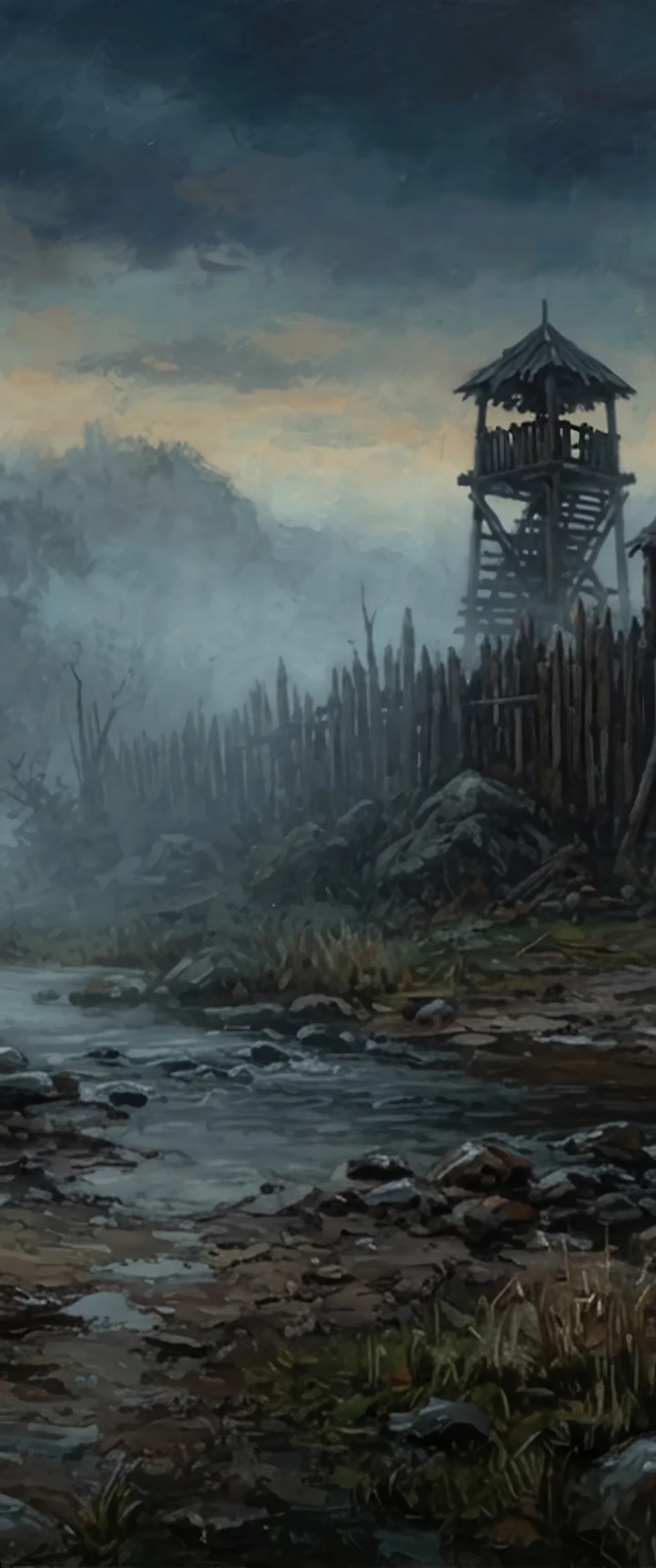
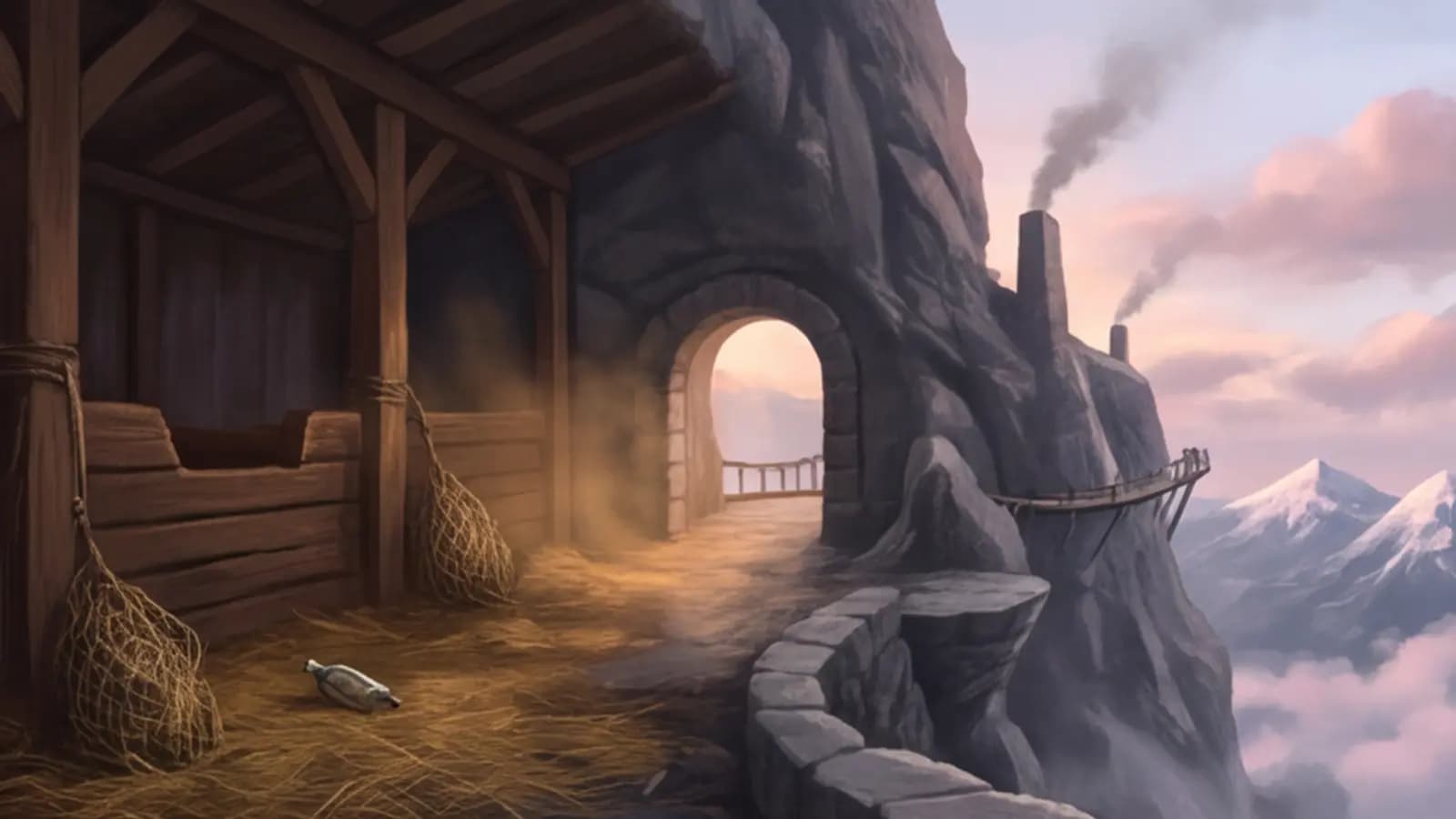
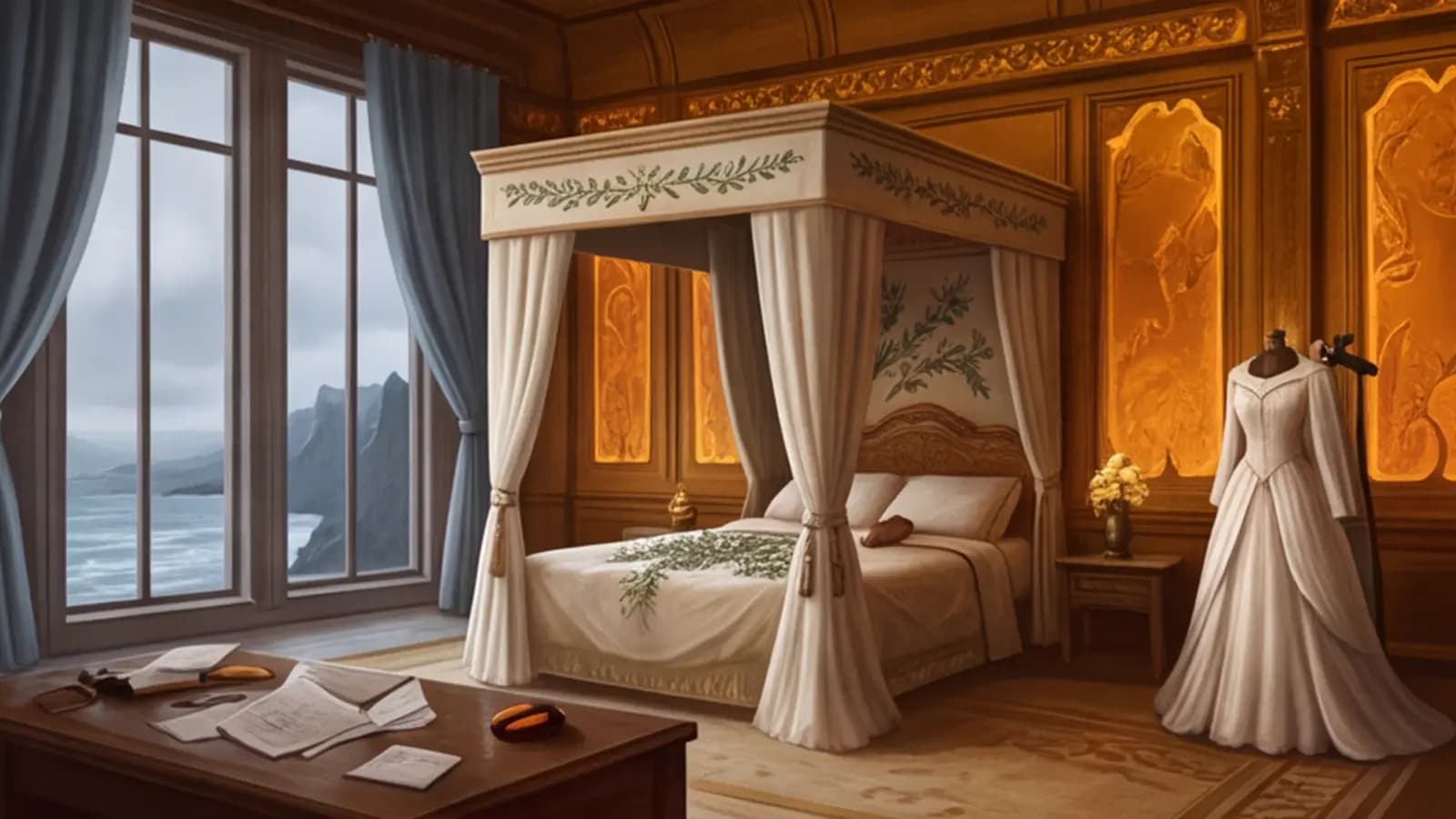
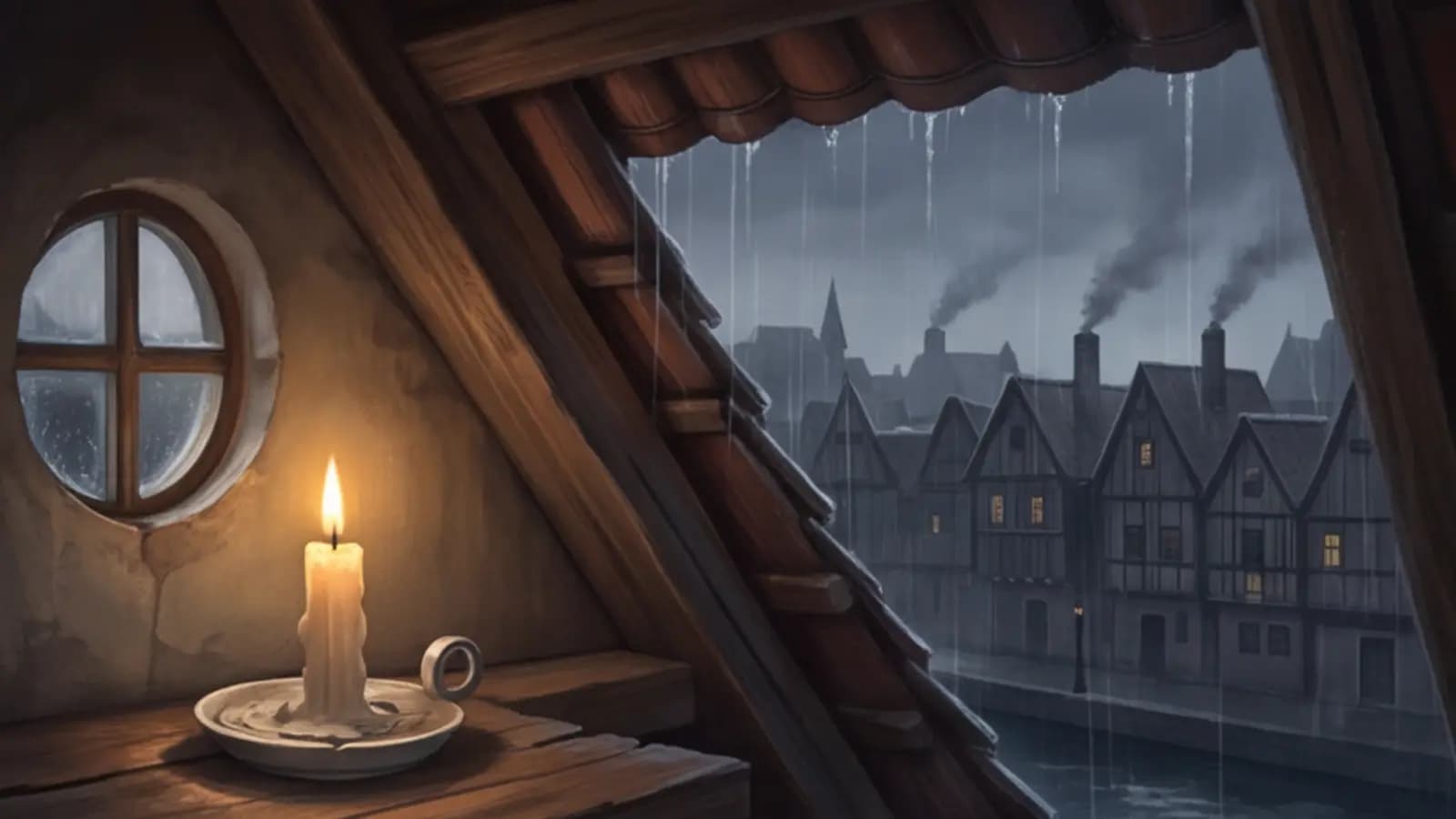
Every fantasy story opens with a short prologue. The player says who the hero is and picks a name. The hero's trade isn't just flavor: it helps on every roll that uses its skill.
From there, each scene ends with a few choices. Some carry a tag like “[Stealth · risky].” That's a check, and the tag gives its odds. Before choosing, the player can see what helps and what hurts: the skill, the trade, the scene's circumstances.
In fantasy, checks mostly test Perception, Persuasion and Stealth. Reading the scorch marks on a gate, talking down a nervous sentry and slipping past a patrol at night are all rolls.
A failed check doesn't end the story. The sentry raises the alarm, and now the hero is the one being hunted through the pines. The road bends, but it keeps going.
Fellow travelers keep score. A warden who trusts the hero improves the odds when she's in the scene, and improves them more once that trust runs deep. A failed check with her adds tension, and the next one gets harder. An ally pushed too far turns wary, and the Characters screen says so.
The choices don't cover everything. “Custom action…” takes any other move in up to 280 characters.
Stories come in chapters of 8 to 12 scenes, and each chapter stops on a cliffhanger. Play is solo. It works like a fantasy text-based RPG for one player, not an MMO, so nobody else's choices change the hero's world.
Each ending belongs to its playthrough. From the ending screen, “Back to the fork” returns to one key decision the game picks and shows where the other road leads.