Nobody just watches a detective work here. The player is the detective. Each scene ends with a few options, and the case only moves where the player pushes it.
Checks here lean on three skills. Perception catches the scuff on a doorframe or the gap in a timeline. Persuasion gets a reluctant witness talking. Nerve keeps the hero's hand steady when a suspect reaches for a drawer.
When a choice carries a tag like “[Persuasion · even odds],” it's a check. Before choosing, the player sees what helps and what hurts. The game rolls the die, and a bad roll doesn't close the case: it turns it.
Witnesses remember how the hero treated them. Someone pushed too hard turns wary, then hostile. A witness who comes to truly trust the hero improves the odds in the scenes they share. A failed check with someone adds tension with them, and the next check with them gets harder.
A blown check doesn't close the case. The suspect slips out the back, a page goes missing from the ledger, and the hero works the angle that's left. Some cases turn on exactly that kind of mistake.
The Journal keeps decisions chapter by chapter, so it's easy to retrace what the hero asked and whom the hero believed. Chapters run 8 to 12 scenes and end on a cliffhanger.
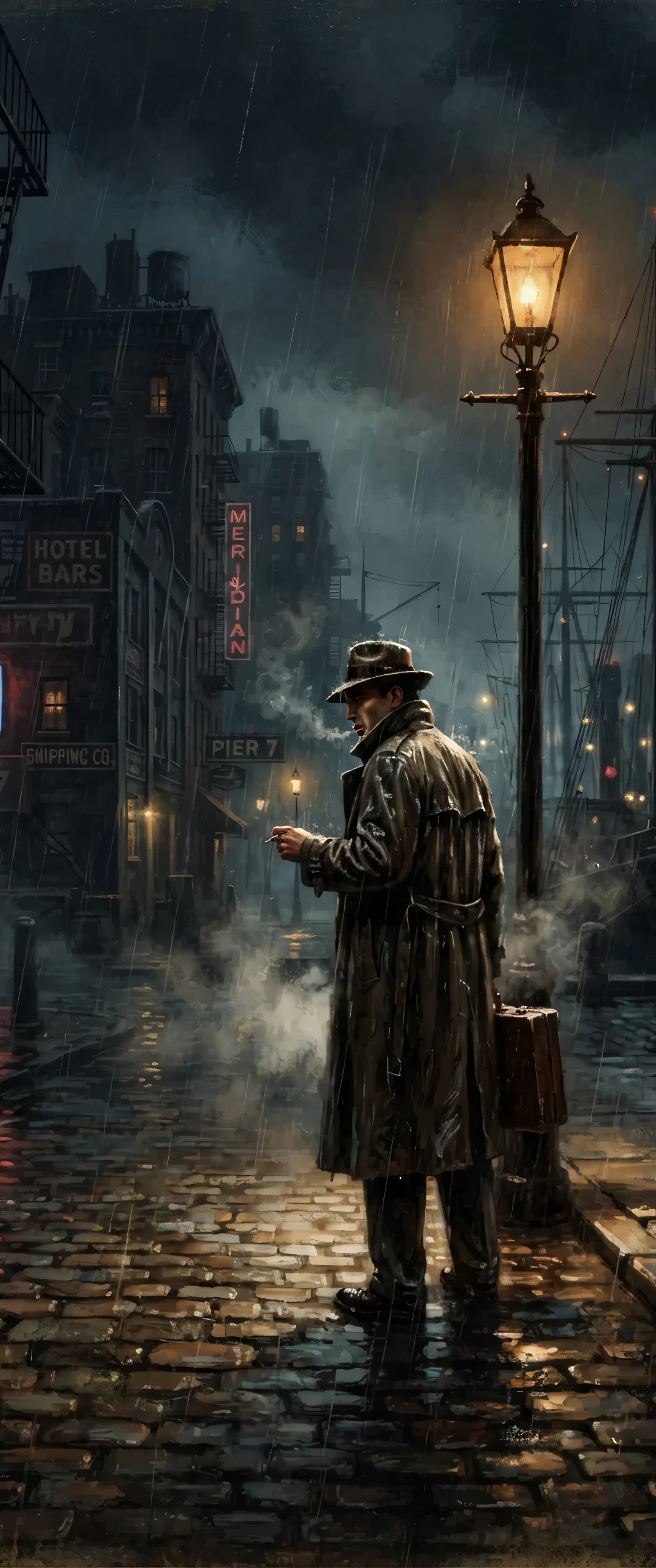
Noir here means rain, debts and promises nobody meant to keep. A classic whodunit swaps the docks for a parlor full of alibis. Either way, the ending is the one the player earned, and from it the story can go back to one key decision.