First scene
The Dry Well
Kutlug
You talk to everyone in their own tongue, interpreter. So which tongue is that letter in? And which tongue do you dream in?
What will the hero do?
The scene goes on from the choice made.
In 755 the Silk Road runs from Samarkand to Chang’an, across mountains, deserts and oasis kingdoms where Buddhist monasteries, Manichaean temples, Zoroastrian fire altars and Nestorian churches stand side by side. Sogdian merchants rule the trade. At the far end lies the Tang empire, at the height of its glory under an ageing emperor, with a favourite general commanding vast armies in the northeast.
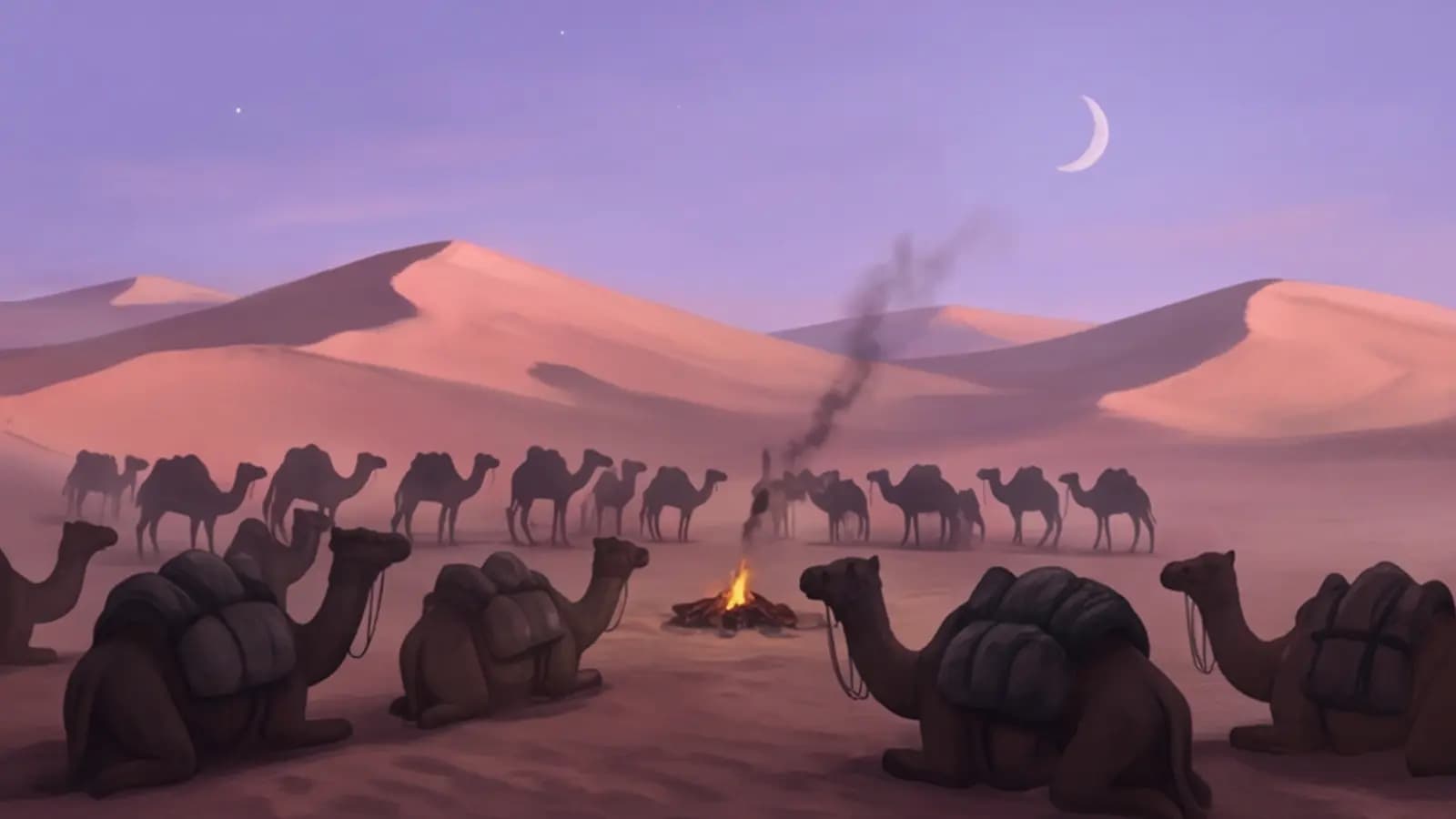
The hero is a Sogdian caravan interpreter who speaks five languages and owns nothing but a horse. Halfway across the Taklamakan, at a dry well, the caravan master Farnbag dies of fever. With his last words he names the hero master of forty camels, the one person who can talk to every guard post and oasis on the road.
In his saddlebag is a silk letter sealed with a general’s seal, to be delivered unread. Opening it means death. At dawn the rival merchant Farnkhund is already counting the camels as if they were his, and Kutlug, a Turkic horse-trader, crouches by the fire watching the saddlebag open.
Ahead lie three thousand li of desert, passes and border forts, and at the end of them an empire about to tear itself apart. This is a slow, wind-scoured story of camel bells and desert stars. The choices change the plot, and every negotiation at a border post and every night watch comes down to a roll of the dice.
First scene
Kutlug
You talk to everyone in their own tongue, interpreter. So which tongue is that letter in? And which tongue do you dream in?
What will the hero do?
The scene goes on from the choice made.

Historical
Shanghai, 1927.

Historical
Iceland, the year 1000.

Historical
Rome, 52 BC.

Historical
London, May 1866.

Historical
Kaifeng, 1124.

Historical
Timbuktu, 1352.

Historical
Constantinople, 1042.

Historical
Agra, 1657.

Historical
Istanbul, 1633.

Historical
Edo, 1702.

Historical
Heian-kyō, around the year 1000.

Historical
Murano, 1571.