First scene
Ninety Feet
Alf
Lovely bit of clay, this. Shame about the neighbours.
What will the hero do?
The scene goes on from the choice made.

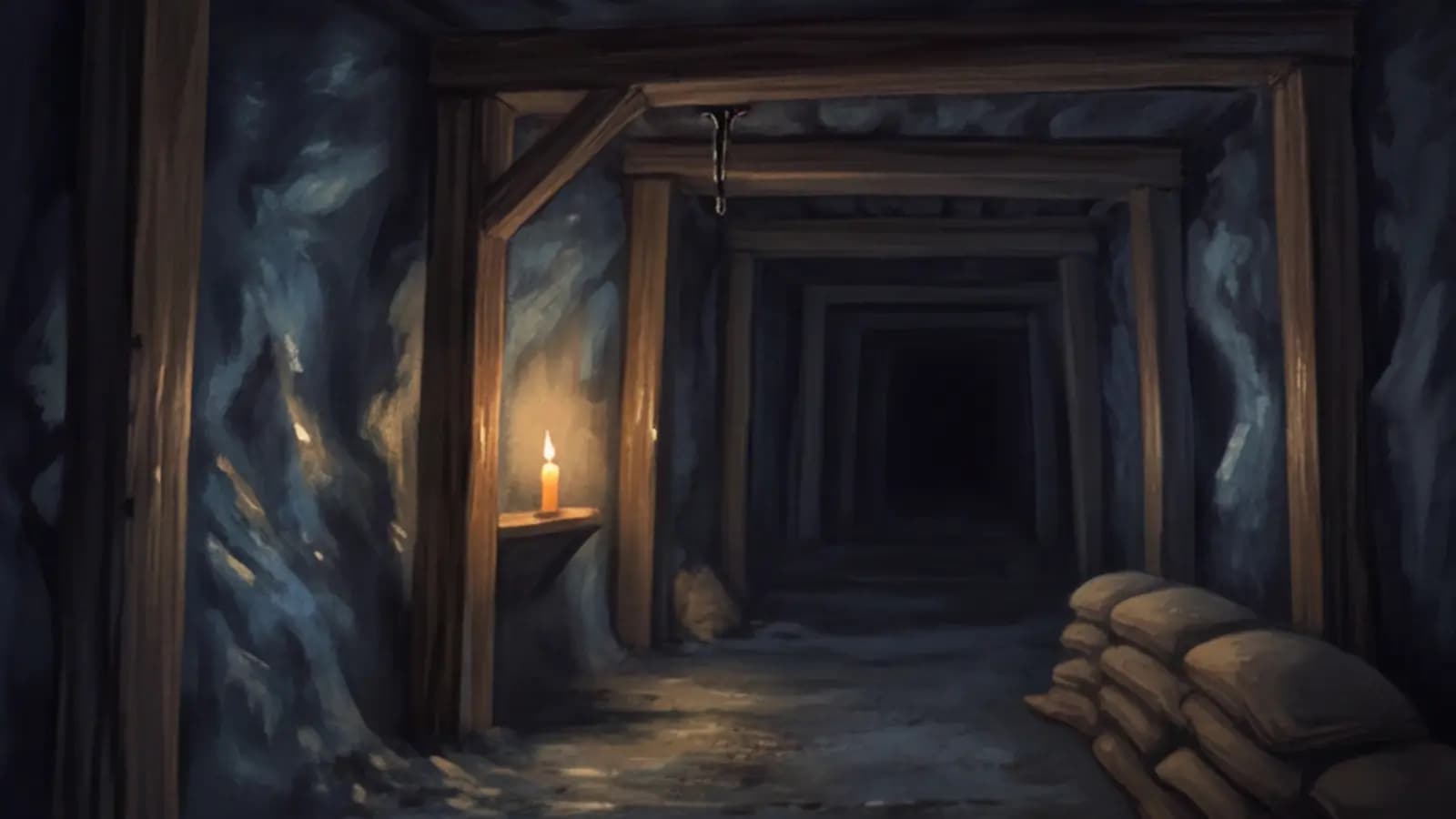
Under the Messines ridge in 1917, two armies fight a second war in the blue clay. Tunnelling companies of miners, sewer workers and clay-kickers dig silent galleries a hundred feet down, lying on their backs and kicking the clay loose with a spade. Beneath the German line lies a chamber packed with forty tons of explosive, to be fired at zero hour in six days.
18+ · Contains brutal scenes and violence.
The hero is a listener: the one who lies in the dark with a geophone pressed to the clay and judges the enemy’s digging by sound. Tonight that sound is a German counter-tunnel coming straight toward the gallery, closer every shift. If the Germans break in, the mine and every man below are lost.
A small charge could stop them, but then the enemy would know the mine is there, and headquarters forbids it. Sergeant Owain, an old Welsh miner, lies beside the hero with his ear to the second geophone. The scraping is twenty feet away.
Choices change the plot: when to speak, when to hold breath, when to go forward with a knife into the dark. Listening, digging and fights in the tunnels come down to a roll of the dice, and a bad roll can cost the gallery, the secret or a mate.
It is a novel of wet blue clay and candle stubs, miners’ black humour, and an enemy close enough to hear him cough.
First scene
Alf
Lovely bit of clay, this. Shame about the neighbours.
What will the hero do?
The scene goes on from the choice made.
War
Solomon Sea, 1942.

War
Virginia, 1862.

War
Warring States Japan.

War
Franconia, 1632.

War
Lorraine, 1944.

War
Tuscany, July 1944.

War
11 November 1918.

War
Ardennes, December 1944.

War
Verdun, 1916.

War
Malta, April 1942.

War
Copenhagen, September 1943.

War
Virginia, 1942.