First scene
Dead Earth on Marble
Narrator
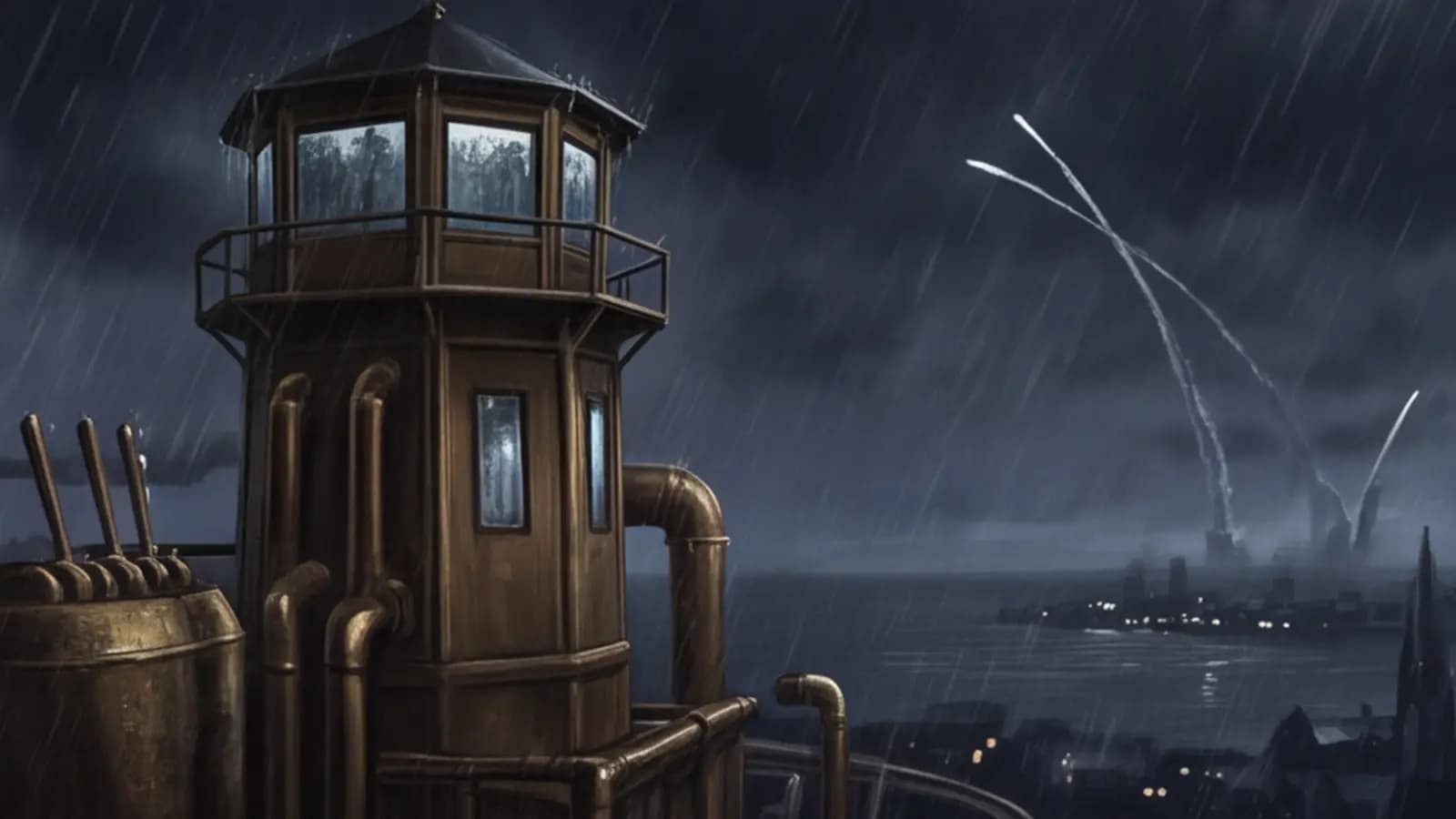
High on the rocket gantry outside, through the streaming glass, you see a figure bent over the launch rails where no one should be.
What will the hero do?
The scene goes on from the choice made.
Bombay in 1877 is the richest city in British India, built on cotton, opium and shipbuilding and run in practice by its merchant families. The Sethna Engine Works has given it the Cloud Tower, a brass-and-teak tower on Malabar Hill whose steam gantries fire rockets of silver salt into the monsoon. The reservoirs are full. The mills run. The city has never been so green.
The hero is a draughtsman at the Sethna works in Mazagon, the best hand in the drawing office and nobody’s heir, who helped draw the tower. On the first night of the season, with the Governor’s party in evening dress at the windows, old Dinshaw Sethna raises a glass to a hundred years of rain.
Then the doors crash open. Pandurang Kelkar, a famine-relief worker from the Deccan, soaked and wild-eyed, empties a sack of dead grey earth on the marble and holds up a ledger of rainfall from twenty villages. Since the tower was built, he says, the rain has stopped falling inland. If he is right, the machine is not making rain. It is taking it.
This is a monsoon-heavy, luminous novel of family loyalty and moral weight. Whom to believe, what to tell and what to do with the tower are the player’s choices, and they reshape the story. Close readings, risky climbs and careful words are settled by a roll of the dice.
First scene
Narrator
High on the rocket gantry outside, through the streaming glass, you see a figure bent over the launch rails where no one should be.
What will the hero do?
The scene goes on from the choice made.

Steampunk
Venice, 1859.

Steampunk
Prague, 1868.

Steampunk
London, 1886.

Steampunk
London, 1879.

Steampunk
London, 1883.
18+Steampunk
Lancashire, 1872.

Steampunk
Tokyo, 1884.

Steampunk
Istanbul, 1877.

Steampunk
Fuzhou, 1878.

Steampunk
Manaus, 1896.

Steampunk
Paris, 1889.

Steampunk
St Petersburg, 1883.